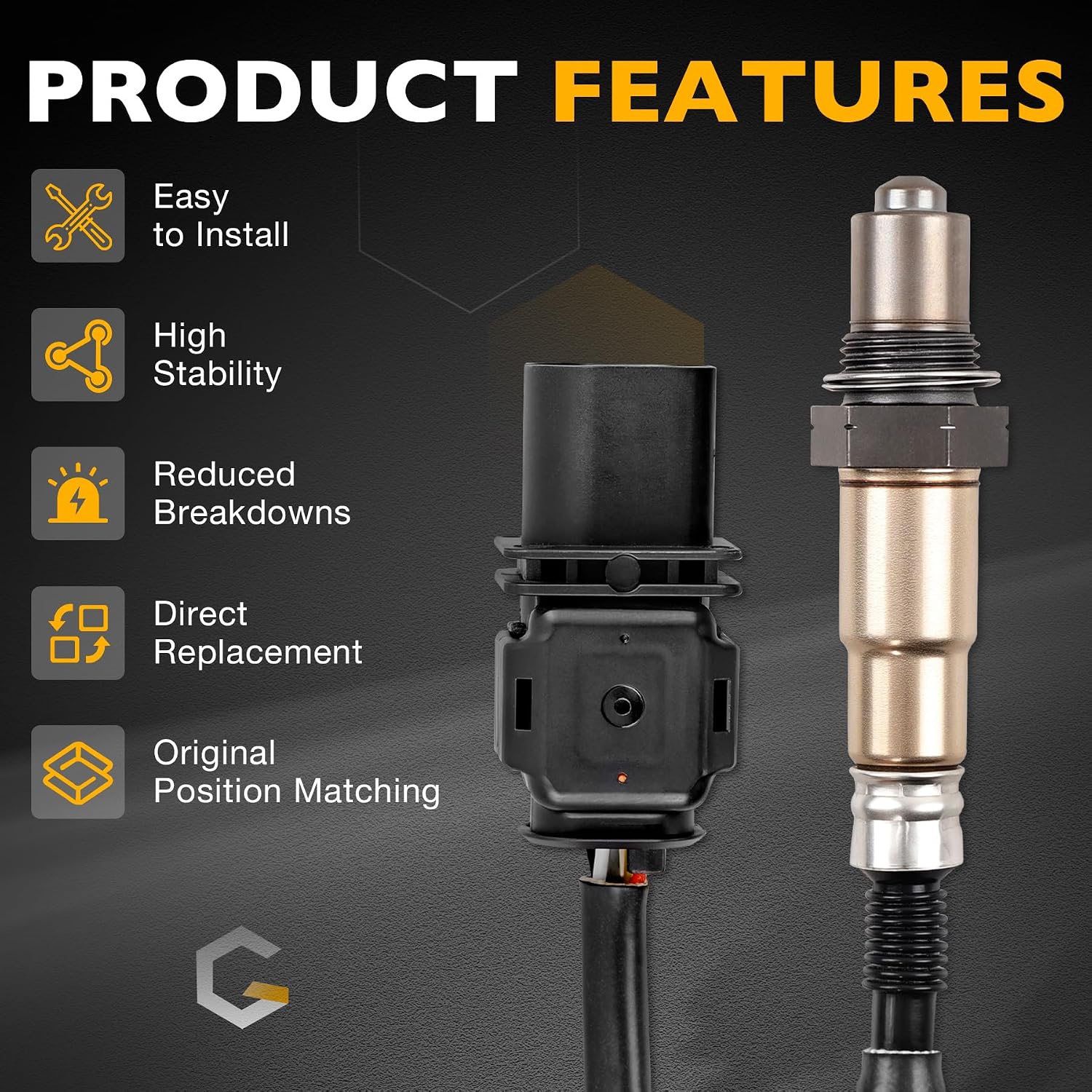
If you’ve converted a carbureted engine to electronic fuel injection — or you’re partway through that journey — you’ve probably encountered the phrase “wideband O2 sensor.” Here’s the short version: a wideband oxygen sensor (specifically the Bosch LSU 4.9, which is the near-universal standard in aftermarket EFI) is the device that reads how rich or lean your engine’s exhaust gases are, and feeds that data back to your ECU so it can correct fuel delivery in real time. Without a healthy one, your self-tuning EFI system is essentially flying blind. The problem is that wideband sensors die — sometimes fast, sometimes mysteriously — and replacement costs add up. This article breaks down the real failure modes documented by owners and engineers, explains the thermal and electrical variables that separate a sensor that lasts two years from one that lasts two months, and gives you clear decision rules for controller selection, mounting, and replacement timing.
| EDITOR'S PICKInnovate Motorsports (3877) LC-… | Mid-tierAEM (30-2004) UEGO Replacement… | Budget pickLSU 4.9 Lambda WideBand O2 Oxyg… | |
|---|---|---|---|
| Sensor type | Bosch LSU 4.9 | UEGO | LSU 4.9 |
| Controller incl. | ✓ | ✗ | ✗ |
| Replaces part | — | — | 17025 / 0258017025 |
| Compatibility | — | — | AEM 30-4110, 30-0300 |
| Price | $210.99 | $120.95 | $36.99 |
| See on Amazon → | See on Amazon → | See on Amazon → |
The LSU 4.9: Why It’s Everywhere, and Why That Matters
The Bosch LSU 4.9 is the dominant planar wideband lambda sensor in the enthusiast EFI market. It’s the same element inside AEM’s X-Series gauges, the Innovate LC-2, the HP Tuners RTD module, and dozens of standalone ECU setups. When manufacturers say “compatible with LSU 4.9,” they mean this specific Bosch element — and that near-universal adoption is both a strength and a trap.
The strength: sourcing is easy, calibration curves are well-established, and third-party replacements are genuinely plug-and-play in most controllers. Per the AEM Performance Electronics X-Series Wideband UEGO Controller instruction manual, the X-Series gauge is factory-calibrated for the LSU 4.9 and does not require recalibration when installing a third-party LSU 4.9 replacement — the element’s output curve is standardized. Multiple owners have confirmed no drift or recalibration need after swapping in aftermarket LSU 4.9 units into AEM X-Series setups, which is worth knowing when you’re evaluating replacement cost.
The trap: because the element is so standardized, builders sometimes assume all LSU 4.9 sensors are equal. They’re not. The failure data tells a more complicated story.
What Actually Kills Wideband Sensors Early
Thermal Shock: The Documented Killer
This is the one with the clearest evidence. An AEM 30-0310 owner documented destroying a sensor by bouncing the car off a launch limiter while the exhaust was cold in negative-10-degree Fahrenheit weather — a textbook case of thermal shock. The LSU 4.9’s ceramic element operates at around 750–800°C internally; when ambient and exhaust temperatures are extremely low and the sensor hasn’t been allowed to pre-heat gradually, the sudden surge from cold to operating temperature can crack the ceramic substrate or damage the internal heating circuit.
Per the Bosch LSU 4.9 Technical Data Sheet, the sensor requires a controlled warm-up sequence — which is exactly what properly designed controller firmware provides. The heater circuit is meant to bring the element to operating temperature at a managed ramp rate. The problem is that some operating conditions override that protection: cold-start wide-open throttle, launch limiter abuse on a cold exhaust, and forced induction setups where raw fuel washes the sensor during cold-start enrichment are all high-risk scenarios.
The practical rule: never run a launch limiter or aggressive rev limiter strategy until the exhaust has been at operating temperature for at least two to three minutes. That’s not conservative advice — it’s the scenario that ate a documented sensor.
Controller Heating Management: The Variable Most Builders Ignore
This one generated real disagreement in the owner community, and it’s worth taking seriously. Multiple owners who switched from the Innovate LC-2 to the AEM inline controller specifically cited sensor longevity as the reason — one describing the LC-2 as having “murdered sensors left and right” before the switch resolved the issue. That’s a strong claim, and it’s worth understanding the mechanism.
The heater circuit in the LSU 4.9 draws significant current — up to 2 amperes during warm-up — and the controller’s job is to regulate that current precisely. If a controller’s heater management is aggressive (running the element hotter than spec, or failing to ramp down once operating temperature is reached), it accelerates aging of both the ceramic element and the internal heater coil. Per Engine Labs’ explainer on wideband sensor failure modes, overheating the element — not underheating — is the more common controller-caused failure, because underheating triggers a fault code while overheating causes gradual, invisible degradation.
This doesn’t mean the Innovate LC-2 is categorically bad. It means that if you’re burning through sensors at a rate that doesn’t match your operating hours, the controller is a legitimate variable to investigate before assuming you’re buying bad sensors.
The OEM vs. Aftermarket Bosch Contradiction
Here’s where the data gets genuinely complicated, and it’s honest to say so rather than paper over it.
One owner documented going through six Bosch-branded sensors before switching to an aftermarket LSU 4.9 and reporting superior longevity. That runs directly counter to the conventional wisdom that OEM Bosch is the gold standard. Other reviewers consistently praise OEM Bosch quality and warn against knockoffs. Both camps exist in the same review pool.
The most plausible reconciliation: Bosch sensors sold through automotive-generic channels (parts stores, generic online listings) may include counterfeit or gray-market units that use the Bosch branding but not Bosch manufacturing. The Bosch Automotive Aftermarket Technical Data Sheet notes that the LSU 4.9 is one of the most counterfeited lambda sensors in the aftermarket. Buying from a distributor that specifically stocks Bosch sensors for performance/OEM applications — rather than the cheapest listing with a Bosch logo — matters more than the brand name alone.
OnAllCylinders’ overview of wideband sensor technology makes the same point: sensor longevity is heavily influenced by element authenticity, not just brand labeling.
Mounting Position: The Water Pooling Problem
By the numbers:
- Minimum recommended bung angle: 10° above horizontal (per Bosch LSU 4.9 spec sheet)
- Optimal angle range: 10°–90° above horizontal
- Risk zone: 0° (dead horizontal) or any angle where the sensor tip points downward
- Worst-case scenario: vertical tip-down, which pools condensation directly on the ceramic
Wideband sensors are not waterproof. The ceramic element will crack if liquid water contacts it at operating temperature — this is a thermal shock event, just a small one, repeated every time condensation forms and hits a hot sensor. Bosch’s spec sheet is explicit: the sensor must be mounted at a minimum of 10 degrees above the horizontal plane, with the tip oriented upward or laterally. Straight horizontal is marginal; any downward angle is a sensor-shortening installation.
The Innovate LC-2 kit uses a longer bung than standard wideband bungs — roughly 18mm hex vs. a 12mm or standard weld bung. In most exhaust installations, the longer bung is a non-issue and actually makes it easier to achieve the correct angular clearance away from the pipe wall. Where it becomes a problem is tight collector installations or primary pipes under about 1.75 inches diameter, where the longer protrusion can conflict with pipe geometry or adjacent headers. If you’re working in a tight engine bay, verify bung clearance before welding.
Controller Comparison: AEM X-Series vs. Innovate LC-2 for Sensor Longevity
| Variable | AEM X-Series / AEM 30-0310 Inline | Innovate LC-2 |
|---|---|---|
| Heater management | Closed-loop, temperature-regulated | Duty-cycle controlled |
| Cold-start protection | Documented ramp-up sequence | Manual delay programmable |
| Sensor compatibility | LSU 4.9, plug-and-play | LSU 4.9, included sensor |
| Owner longevity reports | Generally positive across review set | Mixed; some users report high sensor consumption |
| Bung type | Standard weld bung | Longer 18mm hex bung |
Per the AEM X-Series instruction manual, the controller uses a closed-loop heater regulation strategy that monitors actual element impedance to determine operating temperature — rather than inferring it from a fixed duty cycle. That’s a meaningful architecture difference, and it’s likely why owners who switched to AEM-side controllers after LC-2 sensor failures saw improvement. The Innovate LC-2 manual describes a programmable warm-up delay, which requires the user to set it correctly for their installation — a reasonable design, but one that puts more responsibility on the installer.
How to Tell: Failing Sensor vs. Failing Controller
This is the diagnostic question that trips up even experienced builders. The symptoms overlap: erratic AFR readings, slow response, readings stuck at rich or lean extremes.
The diagnostic split is cleaner than it seems. Per Engine Labs’ failure mode analysis, a failing sensor typically shows one or more of these patterns:
- Slow response to throttle changes (more than 300–400ms lag in readings)
- Readings that are stable but consistently offset (reads 14.7 at idle but misses known-rich transients)
- Physical evidence: soot on the sensor tip, cracks visible in the ceramic, or oil fouling
A failing controller typically shows:
- Intermittent complete signal loss (gauge drops to error code)
- Sensor element shows no apparent physical damage but reads erratically
- Fault codes that don’t correspond to actual exhaust conditions
- Multiple sensors failing in the same installation pattern
The field test: swap in a known-good sensor. If the problem persists, the controller is the suspect. If the new sensor reads correctly, the old one was the issue. That’s the fastest path to a definitive answer.
Frequently Asked Questions
Do third-party LSU 4.9 sensors require recalibration when installed in an AEM X-Series gauge? No. Per the AEM X-Series instruction manual, the gauge is factory-calibrated for the LSU 4.9 element, and that calibration applies to any sensor that conforms to the LSU 4.9 output standard. Multiple owners have confirmed drop-in replacement with no recalibration needed.
What exhaust temperature or condition is most likely to destroy a wideband sensor quickly? Cold-start abuse is the primary culprit — specifically, running aggressive rev limiters, launch limiters, or wide-open throttle pulls before the exhaust has reached operating temperature. At extreme ambient cold (below 0°F), the risk is substantially higher. The Bosch spec sheet recommends allowing the sensor’s heater circuit to complete its warm-up cycle before imposing heavy thermal load on the exhaust.
Does the AEM 30-0310 inline controller really preserve sensors better than the Innovate LC-2? Owner reports suggest it does in many installations, and the architecture difference — closed-loop heater temperature regulation vs. duty-cycle control — provides a plausible mechanism. That said, the LC-2 is not categorically a sensor-killer; installations with a correctly configured warm-up delay and appropriate mounting have reported normal sensor life.
How do I know if my wideband reading is inaccurate due to a failing sensor vs. a failing controller? Swap methodology is fastest. A slow-responding sensor with tip fouling points to sensor failure. Erratic readings with a clean sensor that recur after replacement point to controller issues. Error codes that appear intermittently without trigger events typically indicate controller-side faults.
At what angle does a wideband sensor need to be mounted to avoid water pooling damage? A minimum of 10 degrees above horizontal, per Bosch’s LSU 4.9 specification. The ideal range is 10–90 degrees above horizontal. Dead horizontal is marginal; any downward-facing angle invites condensate contact with the hot ceramic element.
Is the longer bung on the Innovate LC-2 kit a problem for standard exhaust installations? In most installations, no — and the additional length can help achieve proper angular clearance. It becomes a real constraint in tight collector areas or on small-diameter primary pipes, where the longer protrusion may conflict with adjacent pipe geometry. Verify clearance before welding.
The Decision Rule
If you’re running a healthy setup with no sensor casualties, maintain it: correct mounting angle, cold-start discipline, and a controller with documented warm-up management. If you’re burning through sensors faster than your operating hours justify, audit in this order — mounting angle first, controller heater settings second, sensor sourcing third. The failure pattern almost always reveals itself in that sequence. And if you’re specifying a new setup from scratch, the closed-loop heater management in the AEM X-Series architecture is the lower-risk path based on aggregated owner evidence — not because the competition is broken, but because the architecture leaves less to installer configuration.