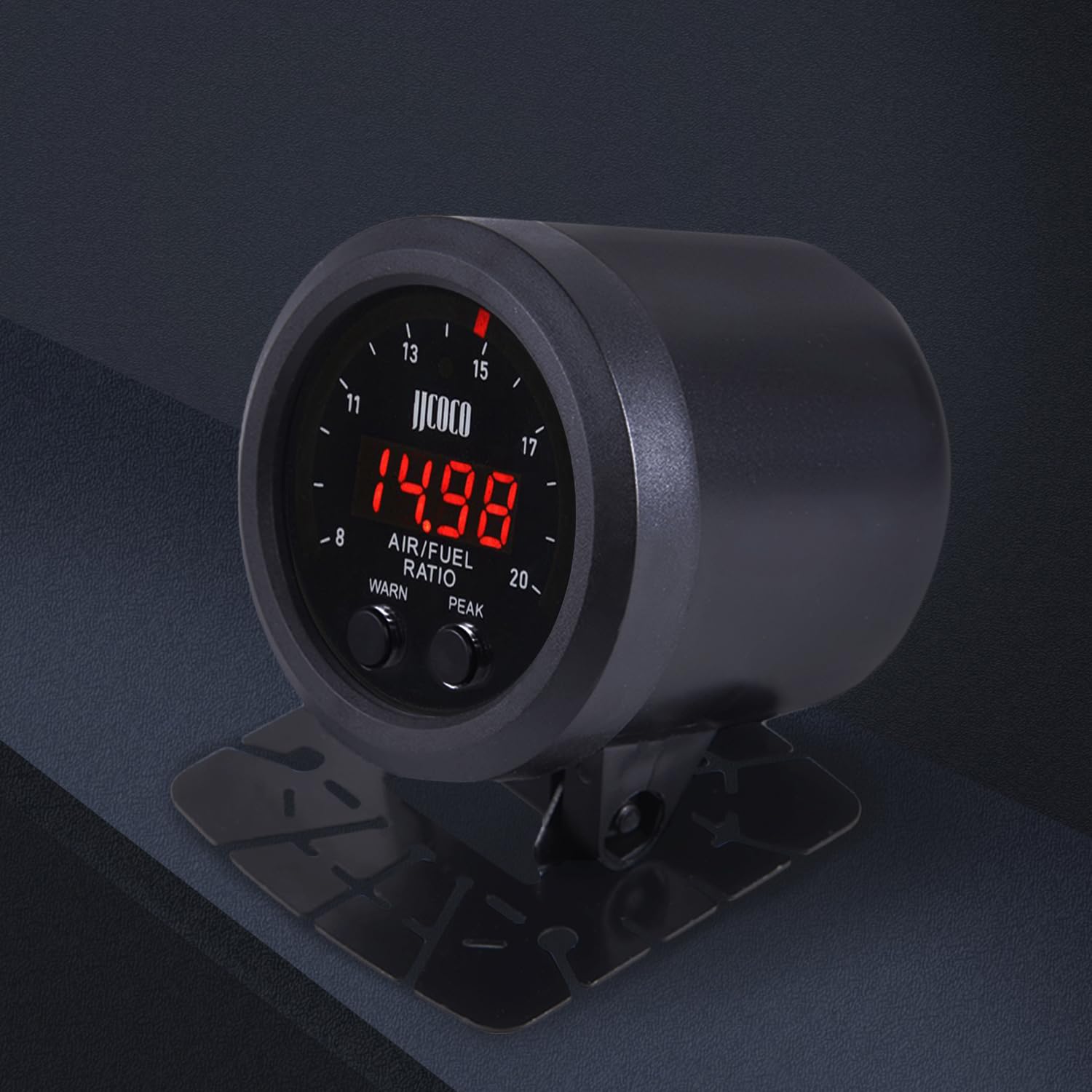
If you’ve ever watched an EFI system hunt for fuel trim or pulled a plug and found it chalk-white on one side of the engine, you already know the problem: you need accurate, real-time feedback on your air-fuel ratio (AFR) — the ratio of air to fuel actually entering the combustion chamber — to tune confidently. A wideband oxygen sensor controller is the device that makes that feedback possible. Unlike the narrow-range oxygen sensors your factory ECM uses to verify emissions compliance, a wideband system (built around a sensor like the industry-standard Bosch LSU 4.9) reads across the full combustion spectrum — from rich, fuel-heavy mixtures around 10:1 all the way to lean, air-heavy mixtures past 17:1. That range is what you need whether you’re dialing in a carburetor, calibrating a self-learning throttle-body EFI, or logging closed-loop data on a standalone ECU. As covered in overview coverage on enginelabs.com and onallcylinders.com, the wideband controller tier you choose has direct consequences for sensor longevity, output flexibility, and tuning confidence. This article breaks down three controller tiers by real-world tradeoffs so you can spend your money once.
The Three Tiers at a Glance
Before going deep, here’s the decision map in plain numbers:
By the Numbers
- ~$82 all-in-one gauge kit — integrated sensor, controller, and display; single analog output; adequate for carb tuning and initial EFI calibration
- ~$200 AEM 30-0300 inline gauge — calibrated digital display, dual analog outputs, broadly recognized benchmark for accuracy-per-dollar
- ~$230–$280 Innovate LC-2 stand-alone — no display, two independently configurable analog outputs, USB data logging, designed to live inside a data system or talk directly to a standalone ECU
None of these figures include installation hardware, bung welding, or sensor replacement — which, as covered below, can be the real cost variable across a build’s life.
Tier Comparison: Budget, Mid, and Premium Controllers
Budget Tier — The $82 All-In-One: Functional, Not Fancy
The budget all-in-one category — units that bundle a 52mm gauge pod, a Bosch LSU 4.9-compatible sensor, and a weld-in bung for around $82 — carries a nuanced reputation among builders. Cosmetically, the consensus is consistent: thin bezels, dim backlighting, and needle action that wouldn’t pass muster on a finished interior. That’s a fair complaint. Functionally, however, the picture is more interesting.
Builders who have run a budget clone and a genuine AEM unit simultaneously — a comparison documented in builder community coverage on enginelabs.com — report that in real driving conditions (cruising, light acceleration, steady-state dyno pulls), the two units appear equally responsive for reading trends. That comparison matters if you’re calibrating a carbureted engine or doing preliminary EFI calibration where trend data is more actionable than laboratory precision.
Where budget all-in-ones show their limits is output flexibility. Most provide a single analog voltage output, typically 0–5V linear, which is sufficient for a MegaSquirt or a Holley Sniper AFR input channel. What they don’t offer is a second independent output, USB data logging, or any ability to configure the output curve for non-standard ECU input ranges. If your EFI system expects a specific 0–5V curve mapped to a particular AFR window and the controller’s output isn’t adjustable, you’re doing math on every log — or, worse, misreading it.
Sensor mortality note: Multiple builder reports, including documentation reviewed by hotrod.com technical staff, flag sensor lifespan as the dominant failure mode across all controller tiers — and budget units are the most exposed. The Bosch LSU 4.9 Technical Data Sheet (Robert Bosch GmbH) specifies that the sensor must be installed within approximately 10° of horizontal to prevent condensate from pooling at the element and causing thermal shock during heat-up. Budget controllers frequently omit this installation guidance from their documentation entirely.
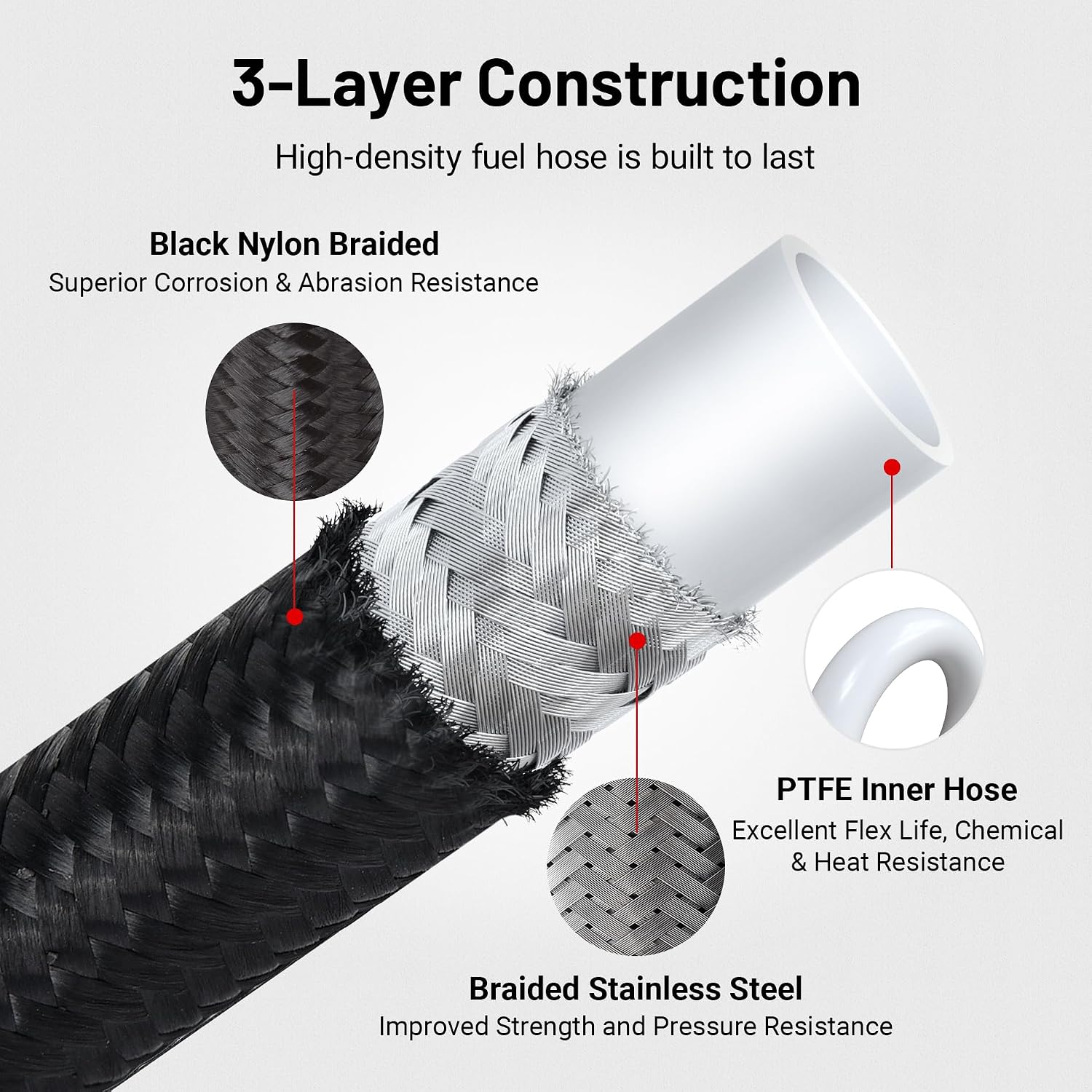
EVIL
$112.99
In stock on Amazon
Check price on AmazonMid-Tier — The AEM 30-0300 Inline: The Benchmark That Earned It
The AEM 30-0300 (and its companion inline gauge variants) has held the enthusiast benchmark position long enough that it appears in virtually every wideband comparison discussion in the performance community, including coverage on enginelabs.com and hotrod.com. At around $200, it delivers a calibrated digital display, dual analog outputs, and an accuracy specification tight enough to satisfy most standalone ECU applications.
The dual-output feature is the practical differentiator at this tier. One output can feed your ECU’s AFR input channel for closed-loop control while the second simultaneously drives a display or a data logger. On a pro-touring car running a Holley HP EFI alongside a data acquisition dash, that matters: you’re not choosing between the ECU knowing your AFR and the driver seeing it. Both happen in parallel without signal splitting or the attenuation that comes from a passive splitter on a single-output controller.
Sensor compatibility trap: According to AEM Electronics 30-0300 product documentation, the replacement sensor for newer X-Series gauges uses a different connector generation than older AEM gauge models. Builders sourcing replacement sensors by spec sheet alone — without cross-referencing their exact gauge model and manufacture date — have reported connector mismatches. Confirming your gauge’s production generation before ordering any replacement sensor is mandatory; matching the LSU 4.9 specification alone does not guarantee connector compatibility.
Controller stress on the sensor heater circuit: This is a less-discussed failure vector that deserves direct coverage. The LSU 4.9 heater element draws significant current during cold start, and controllers that ramp sensor temperature too aggressively — or fail to modulate heater duty cycle properly — can degrade the element over a relatively small number of heat cycles. This is not unique to any single brand; it is a function of heater circuit design. When evaluating any controller tier, verifying that the manufacturer documents a controlled heater warm-up ramp is not optional if you want sensor longevity measured in years rather than months. The Bosch LSU 4.9 Technical Data Sheet (Robert Bosch GmbH) publishes heater circuit management specifications that can be compared against any controller’s published documentation.
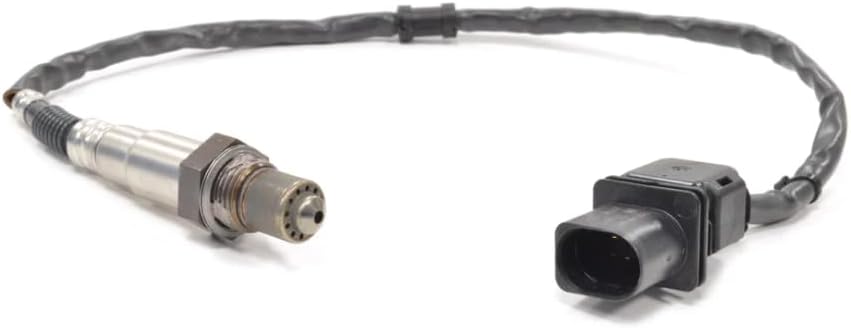
AEM 30-2004
$120.95
In stock on Amazon
Check price on AmazonPremium Tier — The Innovate LC-2 Stand-Alone: Built for Systems Integration
The Innovate LC-2 occupies a different conceptual space than the first two tiers. It has no integrated display — the output is purely electrical: two independently configurable analog voltage outputs plus a USB port for serial data logging via Innovate’s LogWorks software. That stripped-down package is a feature, not an omission, for the specific application it addresses.
If you’re running a MegaSquirt, MicroSquirt, or any standalone ECU that accepts a 0–5V wideband input, the LC-2 wires cleanly into the ECU’s analog input channel. The Innovate Motorsports LC-2 Installation and Operation Manual walks through output configuration steps for MegaSquirt integration in detail, including resistor values and pull-up/pull-down configurations that matter for signal integrity over longer wire runs in an engine bay with significant ignition noise. The USB logging capability means you can simultaneously capture raw lambda data for post-session analysis independent of whatever the ECU is recording — a useful redundancy for endurance applications where a discrepancy between the ECU log and the wideband log can diagnose sensor drift before it becomes a tuning problem.
The cold-weather failure case: At least one LC-2 user attributes a documented sensor failure to thermal shock from a cold exhaust system during a launch at approximately -10°F ambient temperature. The LSU 4.9 element is vulnerable to condensate-induced cracking if it heats up while liquid water is present in the exhaust — a risk at any temperature but most acute in extreme cold where condensation is heaviest. The LC-2’s controlled heater ramp is documented in Innovate Motorsports product literature, but no heater management system fully insulates against the physics of launching a cold car into a condensate-heavy exhaust column. The practical mitigation — idling several minutes before any high-load event in sub-freezing conditions — applies regardless of controller tier. As noted in technical coverage on onallcylinders.com, this is one of the most common mechanisms behind early wideband sensor failures that builders incorrectly attribute to defective hardware.
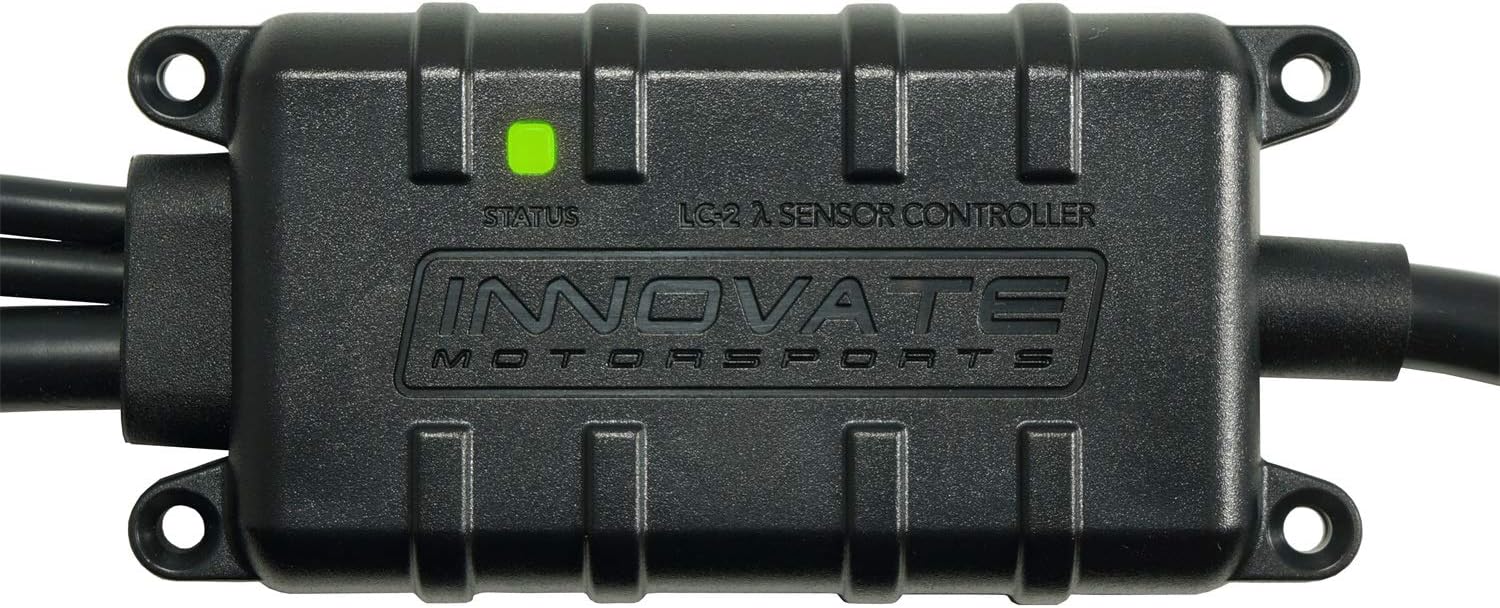
Innovate 3877
$210.99
In stock on Amazon
Check price on AmazonIf X, Then Y — The Decision Rule
- If you’re tuning a carbureted engine or doing initial EFI calibration on a budget, then an $82 all-in-one gives you the trend data you need and leaves money for other parts.
- If you’re running a self-learning EFI system (Holley Sniper, FiTech, Holley HP) and want one device that feeds the ECU and provides a readable gauge display, then the AEM 30-0300 is the correct default spec.
- If your system is ECU-primary — MegaSquirt, Holley Dominator, a standalone race ECU — and AFR data lives in a data logger or integrated dash rather than a pod gauge, then the Innovate LC-2’s dual configurable outputs and USB logging are purpose-built for that architecture.
- In all cases: verify sensor installation orientation against the Bosch LSU 4.9 Technical Data Sheet (Robert Bosch GmbH), confirm that your controller documents a controlled heater ramp before purchase, and treat sensor replacement as a consumable budget line — not a warranty claim you’ll win.
Frequently Asked Questions
Can a budget $82 wideband AFR gauge provide accurate enough readings to tune a carbureted engine? Based on side-by-side comparisons documented in the builder community and referenced in enginelabs.com coverage, budget all-in-ones appear functionally adequate for carb tuning and initial EFI calibration passes. They won’t satisfy closed-loop ECU applications requiring dual outputs or configurable output curves, but for reading trend data on a carbureted street engine, the accuracy delta between a budget unit and a $200 AEM is smaller than the price delta suggests.
Does the wideband controller itself affect LSU 4.9 sensor lifespan? Yes, and this is underappreciated. The LSU 4.9’s internal heater element is sensitive to how aggressively the controller ramps sensor temperature during cold start. Controllers that don’t modulate heater duty cycle properly can accelerate heater element degradation over repeated heat cycles. Per the Bosch LSU 4.9 Technical Data Sheet (Robert Bosch GmbH), heater circuit management specifications are published and should be verified against any controller you are considering.
Will the AEM 30-0300 replacement sensor fit older AEM wideband gauges? Not reliably. AEM Electronics 30-0300 product documentation notes that replacement sensors for newer X-Series gauges use a different connector generation than older AEM gauge models. Confirming your gauge’s exact model and production generation before ordering a replacement sensor is mandatory — matching the LSU 4.9 specification alone is not sufficient to guarantee connector compatibility.
How do I wire an Innovate LC-2 to a MegaSquirt ECU for closed-loop wideband control? The Innovate Motorsports LC-2 Installation and Operation Manual covers this in detail, including analog output configuration and recommended pull-up resistor values for MegaSquirt input channels. Output 1 is typically configured to match MegaSquirt’s expected 0–5V AFR input curve; Output 2 can simultaneously drive a display or data logger. Innovate’s LogWorks software allows output calibration verification against logged lambda data before finalizing closed-loop PID settings in TunerStudio.
What causes a wideband O2 sensor to fail within weeks of installation? The two dominant failure modes documented across builder experience and discussed in technical coverage on onallcylinders.com and hotrod.com are installation orientation and thermal shock. The Bosch LSU 4.9 must be installed within approximately 10° of horizontal to prevent condensate pooling at the sensor element — an error that causes cracking during heat-up. Thermal shock from launching a cold engine through a condensate-heavy exhaust is a second documented mechanism. A third, less-discussed mechanism is aggressive heater circuit ramping by the controller itself, which can degrade the heater element if the controller lacks a documented controlled warm-up ramp.