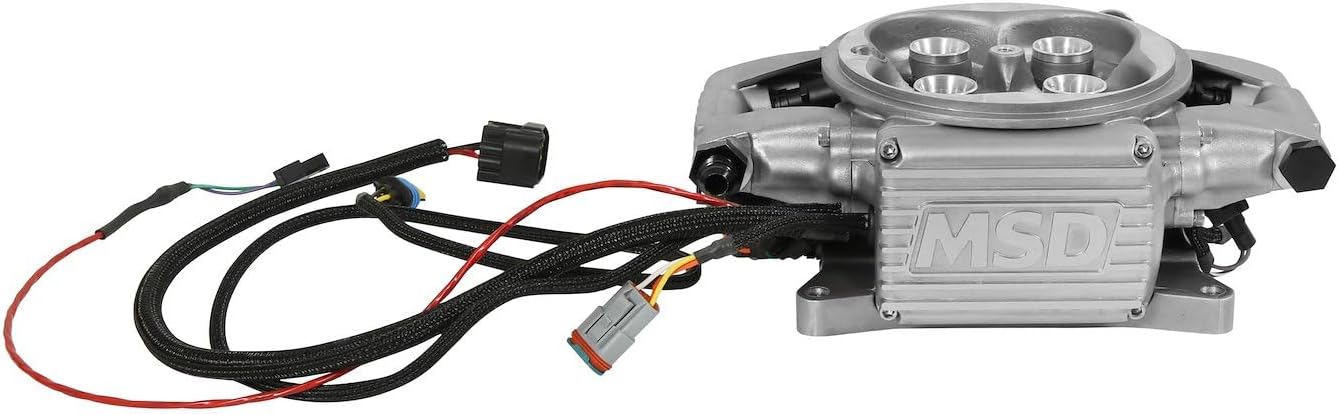
If you’ve been running a carburetor — the mechanical fuel-mixing device that’s been the default on American V8s for decades — and you’re thinking about switching to electronic fuel injection (EFI), MSD’s Atomic lineup is probably on your shortlist. EFI replaces the carb’s fixed jets and needle-and-seat fuel delivery with a computer-controlled system that constantly reads engine conditions and adjusts fuel delivery in real time. The result is better cold starts, improved throttle response, and more consistent power across varying conditions. MSD makes two kits that look similar on a parts-store shelf: the Atomic TBI (throttle-body injection) base kit, and the Atomic EFI Master Kit, which runs about $450 more. That gap is real money. This article breaks down exactly where it goes, which applications genuinely need the extras, and gives you a clear decision rule so you’re not paying for hardware you’ll never use — or buying short and retrofitting later at twice the cost.
What You Actually Get for $450 More: A Component-Level Breakdown
Let’s establish the baseline. Per MSD Performance’s published specification sheets for both the Atomic TBI and Atomic EFI Master Kit (2025), the Atomic TBI base kit ships with the throttle body unit (a 4-barrel-style housing with integrated fuel injectors), a hand-held controller/display, an ECU (engine control unit — the brain of the system), wiring harness, a fuel pressure regulator, and the core sensors: throttle position sensor (TPS), manifold absolute pressure sensor (MAP), and an oxygen sensor (O2 sensor) for closed-loop operation.
The Master Kit includes all of the above, plus:
- An inline fuel pump rated at 255 LPH (liters per hour)
- A fuel pressure gauge and fittings
- An air/fuel ratio (AFR) wideband controller and gauge
- Extended wiring and installation hardware
That’s not one extra part — it’s a complete fueling subsystem. Here’s a quick numbers-only snapshot of the core difference:
By the Numbers Atomic TBI base kit (street price, May 2026): ~$1,050–$1,100 Atomic EFI Master Kit (street price, May 2026): ~$1,475–$1,550 Approximate gap: $425–$460 Fuel pump included in Master Kit: 255 LPH in-line unit, rated for engines up to approximately 600 hp Wideband AFR gauge included: Yes (Master Kit only)
Street prices sourced from major performance retail listings as of May 2026. Verify current pricing before purchasing — this market moves.
The Three Core Buying Scenarios: Which Kit Fits Where
The component gap between these two kits creates three genuinely distinct buyer situations. Each one has a clear answer.
H3: The Builder Starting from a Pure Carbureted Baseline
If your car is running a mechanical or low-pressure electric fuel pump — which describes the majority of carbureted muscle cars and restomods — you need to replace that pump before running either Atomic kit. Carbureted systems operate at 5–7 psi of fuel pressure. Per MSD Performance’s Atomic EFI product specification documentation, the Atomic system requires 58–62 psi. Your existing pump will not bridge that gap. You need a high-pressure unit regardless of which kit you choose.
The Master Kit’s included 255 LPH inline pump is MSD’s direct answer to this requirement. Engine Labs, in their documented coverage of the Atomic EFI platform (“MSD Atomic EFI System Dyno Test and Review,” enginelabs.com), notes that the inline pump is a practical solution for most street-driven applications and eliminates the complexity of a full in-tank pump swap for builders who want to preserve the original fuel tank. That’s a real installation advantage.
If you price a quality standalone high-pressure inline pump — brands like Walbro, Aeromotive, or Carter — you’re looking at $120 to $220 depending on flow rating and brand tier. Add a pressure gauge and you’re at $150–$280 in additional parts before you’ve touched the air/fuel ratio monitoring question. The Master Kit’s price premium closes to somewhere between zero and $150 in real money for this buyer, with matched, warrantied components rather than a mix-and-match assembly.
The verdict for this scenario: The Master Kit is the more economical path once you account for the parts you’d buy anyway.
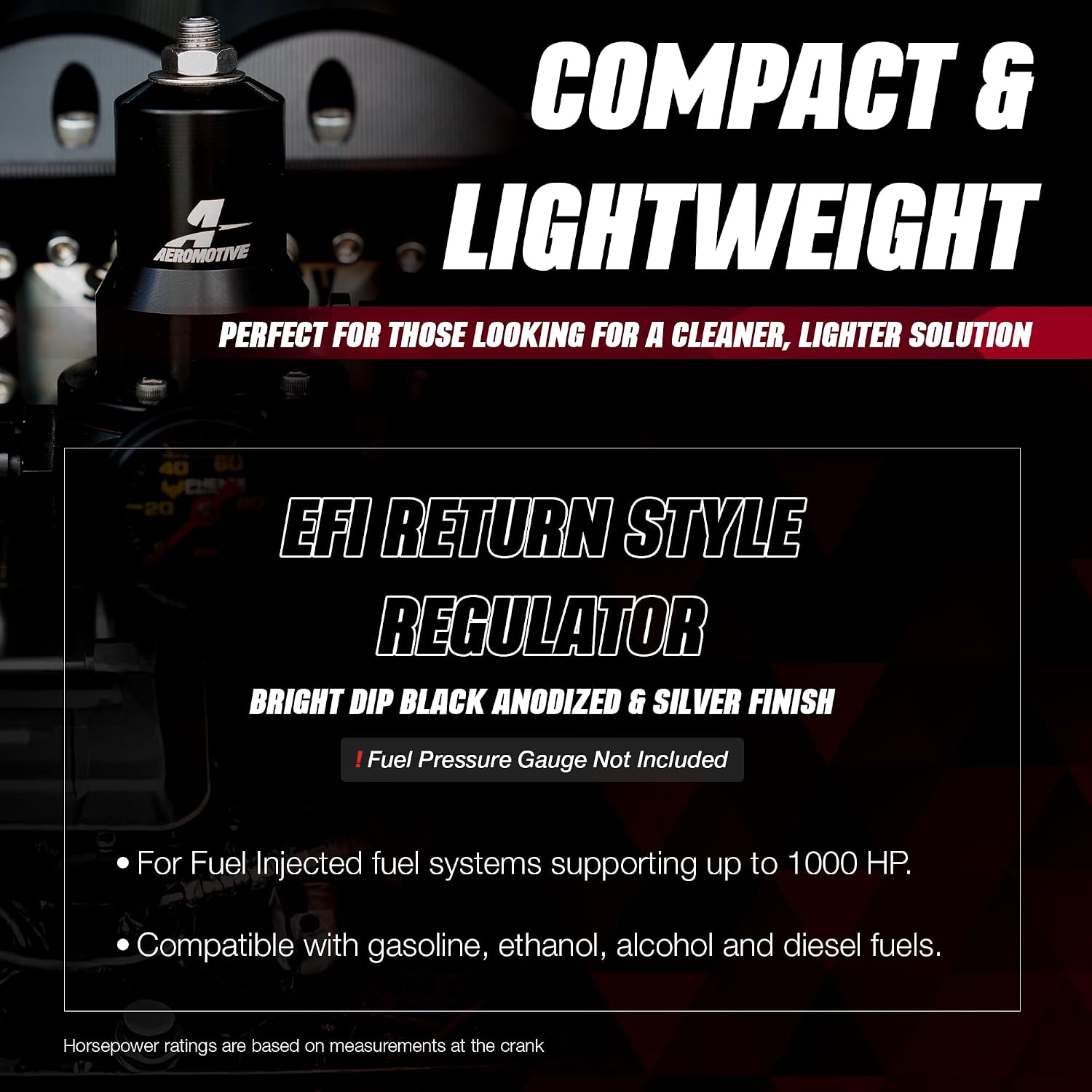
Aeromotive
$175.13
In stock on Amazon
Check price on AmazonH3: The Builder Who Already Has EFI-Spec Fueling Installed
Some buyers arrive at this comparison with a head start. If you’ve previously attempted an EFI conversion, run a fuel-injected crate engine, or installed a returnless high-pressure fuel system for any reason, you may already have a pump that meets or exceeds the Atomic’s 58–62 psi requirement. In that case, the Master Kit’s pump is hardware you’re paying for but cannot use — it would be redundant.
For this buyer, the remaining premium in the Master Kit is the wideband AFR system. That’s a genuine value judgment: the wideband is useful, but it’s also available as a standalone purchase from brands like Innovate Motorsports or AEM for $180–$250. If your fueling is sorted and you’re budget-conscious, buying the base kit and adding a standalone wideband later is a defensible choice — not the default recommendation, but a real one.
The verdict for this scenario: The base Atomic TBI kit is the smarter buy. Keep the savings, source a standalone wideband if your build warrants it.
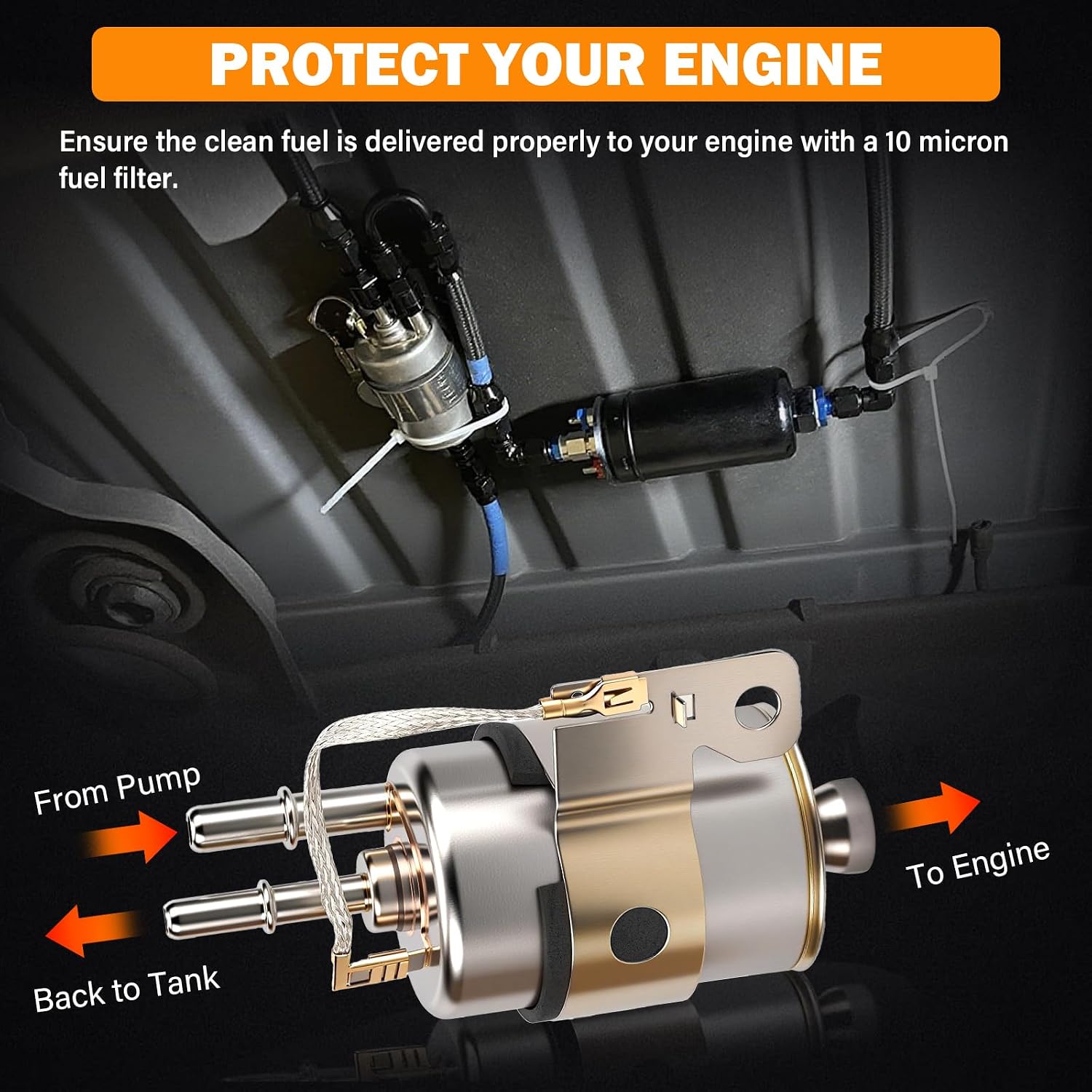
GSL392
$58.99
In stock on Amazon
Check price on AmazonH3: The Builder with Track Use, Aggressive Cam, or High Compression
For anyone running compression above 10:1, a performance cam with a longer duration profile, or any combination of street and track use, the wideband AFR system included in the Master Kit shifts from “useful” to “necessary.” Here’s why.
Both kits include a narrowband O2 sensor as part of their closed-loop fuel control. Closed-loop means the ECU reads exhaust oxygen content and trims fuel delivery to hit a target air/fuel ratio — typically around 14.7:1 at idle and cruise (stoichiometric, the chemically ideal ratio for a gasoline combustion event). The narrowband sensor reads accurately in a narrow window around stoichiometric — adequate for idle and part-throttle cruise — but it is not precise at wide-open throttle (WOT) enrichment zones where you’re targeting a richer 12.5:1–13.0:1 ratio for power.
The wideband AFR system in the Master Kit reads accurately across the full operating range — roughly 10:1 to 18:1 — which gives you a real-time readout under hard acceleration. On All Cylinders, in their published piece “Understanding Self-Learning EFI: How Closed-Loop Fuel Control Works” (onallcylinders.com), explains that wideband data is what allows a builder to confirm that power enrichment is actually delivering the fuel the engine needs at WOT, not just at cruise. Without it, you’re making power tune decisions with incomplete data.
Hot Rod Magazine’s documentation of bolt-on EFI systems (“Bolt-On EFI Shootout: Self-Tuning Throttle Body Systems Compared,” hotrod.com) consistently notes that builders who skip wideband monitoring on performance builds end up either pulling the system for a standalone tune or retrofitting gauges after the fact — both routes costing more than the Master Kit price delta.
The wideband gauge also has standalone diagnostic value: you can use it to verify tuning health through any future modifications. It’s a permanent window into combustion quality, not a one-time install item.
The verdict for this scenario: The Master Kit is the required choice. Don’t run an aggressive build without wideband visibility.
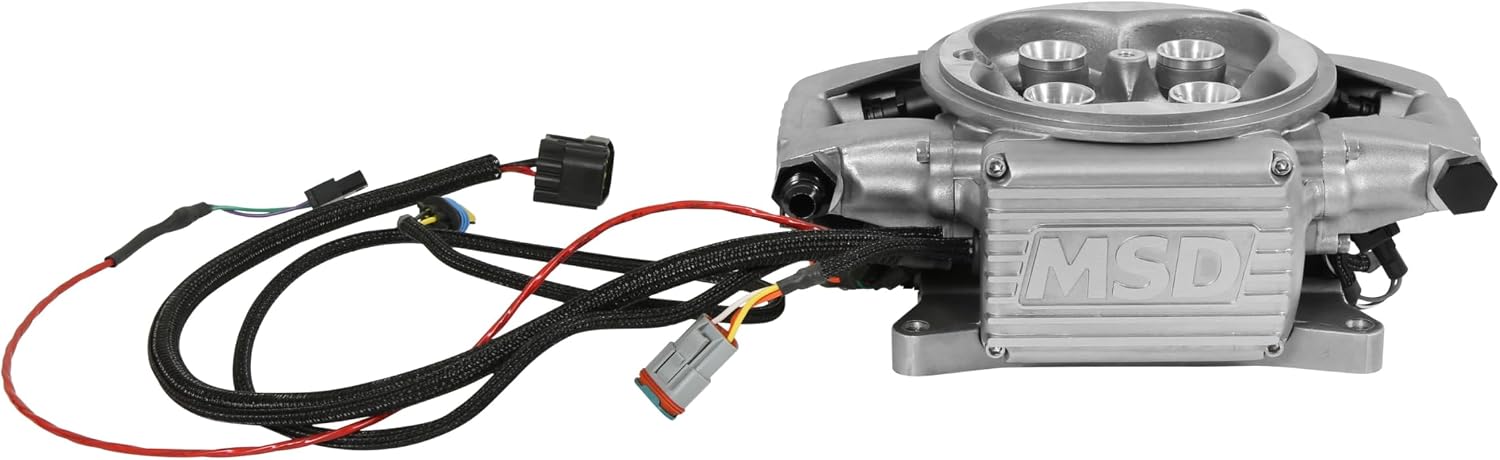
MSD
$2,151.95
In stock on Amazon
Check price on AmazonWhat Both Kits Share: The Atomic ECU’s Capabilities and Ceiling
It’s worth being explicit that both kits run the same Atomic ECU with the same self-learning algorithm. The engine management capability is not tiered between these products. Per MSD Performance’s published specification documentation, the Atomic ECU supports:
- Four-injector sequential or batch-fire injection
- Closed-loop O2 correction
- IAC (idle air control) for cold-start enrichment
- Built-in timing control when connected to MSD’s ignition systems
- Bluetooth connectivity for smartphone data monitoring
For engines in the 300–500 horsepower range on pump gas with a street-friendly cam, both kits deliver identical ECU capability. Engine Labs’ documented review of the Atomic EFI platform reports that the self-learning fuel map typically stabilizes within three to five drive cycles under normal street use — a genuinely fast learning curve compared to older-generation self-tuning systems.
Where the Atomic system hits its ceiling — and both kits share this ceiling equally — is at roughly 525–550 hp on the injector flow side. Per MSD Performance’s product specification documentation, the four injectors in the throttle body are rated for that threshold. Above it, you’re looking at a platform step up to something like the MSD Atomic AirForce (multi-port injection, starting around $2,500) or Holley’s Sniper 2 lineup, which offers deeper data logging and port-injection architecture.
Motor Trend, in their published conversion resource “Carb to EFI Conversion Guide: What Every Builder Needs to Know” (motortrend.com), notes that builders who anticipate future power additions above 550 hp are better served specifying a more capable platform from the start rather than converting twice. That’s advice worth heeding before you commit to either Atomic kit.
Application-Specific Decision Summary
The three H3 scenarios above cover the vast majority of buyers, but here’s a consolidated decision reference:
Buy the Atomic TBI base kit if:
- You already have a returnless or high-pressure EFI-spec fuel pump installed and operational
- Your engine is street-only, under 10:1 compression, with a mild cam
- Your budget is constrained and you’re comfortable adding wideband monitoring later via a standalone unit
Buy the Atomic EFI Master Kit if:
- You’re starting from a pure carbureted baseline with no high-pressure pump
- Your build sees any track use, aggressive cam specs, or compression above 10:1
- You want matched, warrantied components rather than a mixed-source kit
- You want the diagnostic capability the wideband provides long-term
Step up to a different platform (Holley Sniper 2, MSD Atomic AirForce) if:
- You’re at or approaching 550+ hp
- You want multi-port sequential injection for cylinder-specific fuel delivery
- You’re building for endurance or road-course competition where data logging depth matters
The Bottom Line
The $450 gap between the Atomic TBI and the Master Kit is real, but so is the cost of assembling the missing pieces yourself. For any builder coming off a stock carbureted fuel system — which covers the majority of muscle-car restorers and first-time EFI converters — the Master Kit is the more economical path once you account for the pump and wideband hardware you’d buy anyway. The base kit has a genuine use case, but it’s narrower than it looks on the product listing: it belongs in the hands of a builder who has already solved the fueling problem.
What neither kit will do is outgrow its injector rating or become a port-injection system. If your power goals are aggressive, be honest about that now. Retrofit costs — a second conversion, a second round of tuning, a second round of downtime — consistently exceed the price of specifying the right platform from the start.
The MSD Atomic EFI Master Kit is available through major performance retailers including Summit Racing and Jegs. The base Atomic TBI kit is stocked at the same retailers for builders who have confirmed their fueling is already EFI-ready. Do the component math for your specific build, price the delta against what you’d spend assembling the base kit into a complete system, and the right answer usually makes itself obvious.