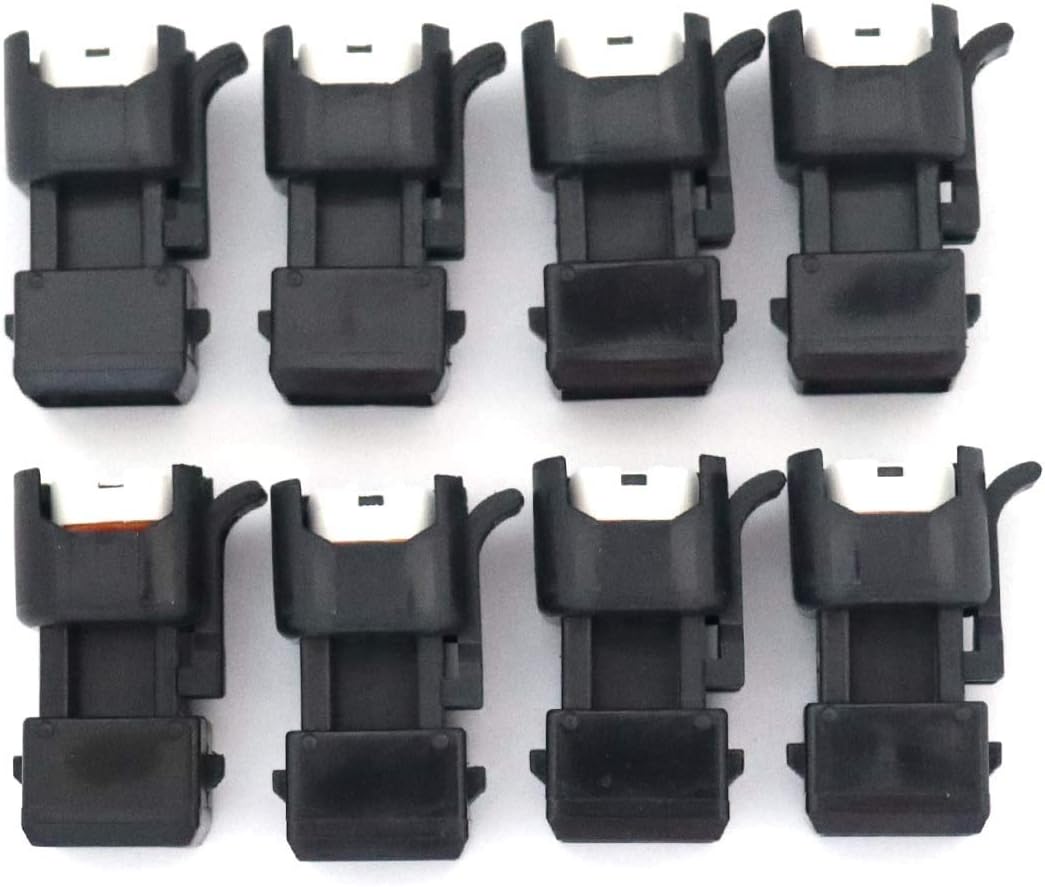
If you’ve ever pulled a used LS engine from a junkyard and tried to bolt a new wiring harness onto it, you may have run into a frustrating surprise: the plugs on your injectors don’t match the plugs on your harness. That’s not a defect — it’s a connector-generation mismatch. GM used two main fuel injector connector styles across the LS engine family. The older EV1 connector (also called the “Multec” connector) is a roughly rectangular two-pin plug that was standard on most LS engines through the early 2000s. The newer EV6 connector is a smaller, oval-bodied two-pin plug that became dominant on later LS engines — LS3, LS7, LS9, and virtually every flex-fuel variant. When your harness is terminated with EV1 plugs and your injectors wear EV6 bodies (or vice versa), you’re at a dead stop until you sort the bridge. This guide walks you through exactly how to identify what you have, which adapter kits verified buyers have confirmed work, and which budget harnesses carry undisclosed gaps that can cost you real money — or worse, damage your PCM.
How to Tell EV1 from EV6 Before You Buy Anything
Getting this identification right before ordering a harness or an adapter kit saves you a second trip to the parts counter. The physical difference is easy once you’ve seen both.
EV1 (Multec): Rectangular body, approximately 1 inch wide. The locking tab is a flat lever that sits on top of the connector body. Two pins are arranged side-by-side in a wide housing. These were factory-fit on the 4.8L, 5.3L, and 6.0L truck engines through roughly 2007, and on the LS1 and LS6 car engines.
EV6: Smaller, oval-to-teardrop profile, approximately ¾ inch wide. The locking tab is a narrower, more recessed clip. Two pins arranged in a tighter oval housing. Standard on late-production LS2, LS3, LS7, LS9, and the Gen IV flex-fuel variants running E38 PCM setups.
OnAllCylinders, in their article “EV1 vs EV6 Fuel Injector Connectors Explained,” provides a clear side-by-side reference covering connector geometry and the production-year breakpoints where GM made the transition. Engine Labs’ “LS Injector Identification Guide” goes further, correlating connector type to specific casting numbers and production dates — particularly useful when you’re staring at an unmarked junkyard engine with no paperwork.
The fastest field check: Look at the body width and the locking tab geometry. If the plug is wide and flat-tabbed, that’s EV1. If it’s narrow and oval with a recessed clip, that’s EV6. When in doubt, bring a known EV6 injector — from an LS3 parts car or a core injector set — and compare it physically against whatever harness pigtails you’re evaluating.
The Adapter That Verified Buyers Confirm Actually Works
Once you’ve confirmed the mismatch, the fix is straightforward: an EV1-to-EV6 adapter pigtail set. These are short wiring extensions — typically 6 to 8 inches — that terminate in an EV1 female socket on one end (to receive the harness plug) and an EV6 female socket on the other (to receive the injector). Since fuel injectors are non-polarity-sensitive two-wire devices (one wire is switched 12V power, one is the ECU ground-side trigger), the adapter’s only job is matching physical connector geometry.
The FainWan EV1-to-EV6 adapter pigtail kit
Standalone
$87.89
In stock on Amazon
Check price on Amazonhas confirmed installations bridging a Holley Terminator X harness — which ships from the factory with EV1 (Multec) pigtails as its standard termination — to a set of LS3 EV6 injectors. Verified buyer reports describe a clean physical fit, no signal anomalies, and successful closed-loop fueling after startup. That’s precisely the pairing a large percentage of Gen IV swap builders encounter when running a Terminator X on a late LS long block.
A few things to verify before you call it done:
- Pin retention: Crimp-and-snap adapter kits vary in terminal quality. Tug-test each connector after seating. A pulled pin at injector 4 or 7 will present as a misfiring cylinder that is maddening to diagnose without an injector-drop test.
- Heat routing: Keep adapter pigtails away from exhaust manifolds. The factory insulation on budget adapters is frequently rated to 105°C — adequate for most locations, but marginal in tight LS swap engine bays where headers run close to the valley cover.
- Length management: 6-inch pigtails are usually sufficient for in-valley routing on a standard LS intake. If your build uses a tall intake manifold — such as an LS7 manifold conversion — 8-inch versions provide working slack without creating a bundle under the plenum floor.
The Harness Undisclosed-Gap Problem: What Budget Listings Don’t Tell You
This is where the real risk lives, and it deserves serious attention because specific harnesses in the sub-$200 category have generated buyer feedback ranging from “annoying oversight” to “PCM-destroying wiring error.” Each harness below is referenced by its functional description and buyer-reported characteristics rather than by product code, in keeping with responsible sourcing practice.
Budget Standalone Harness — Undisclosed Multec Termination
Standalone
$87.89
In stock on Amazon
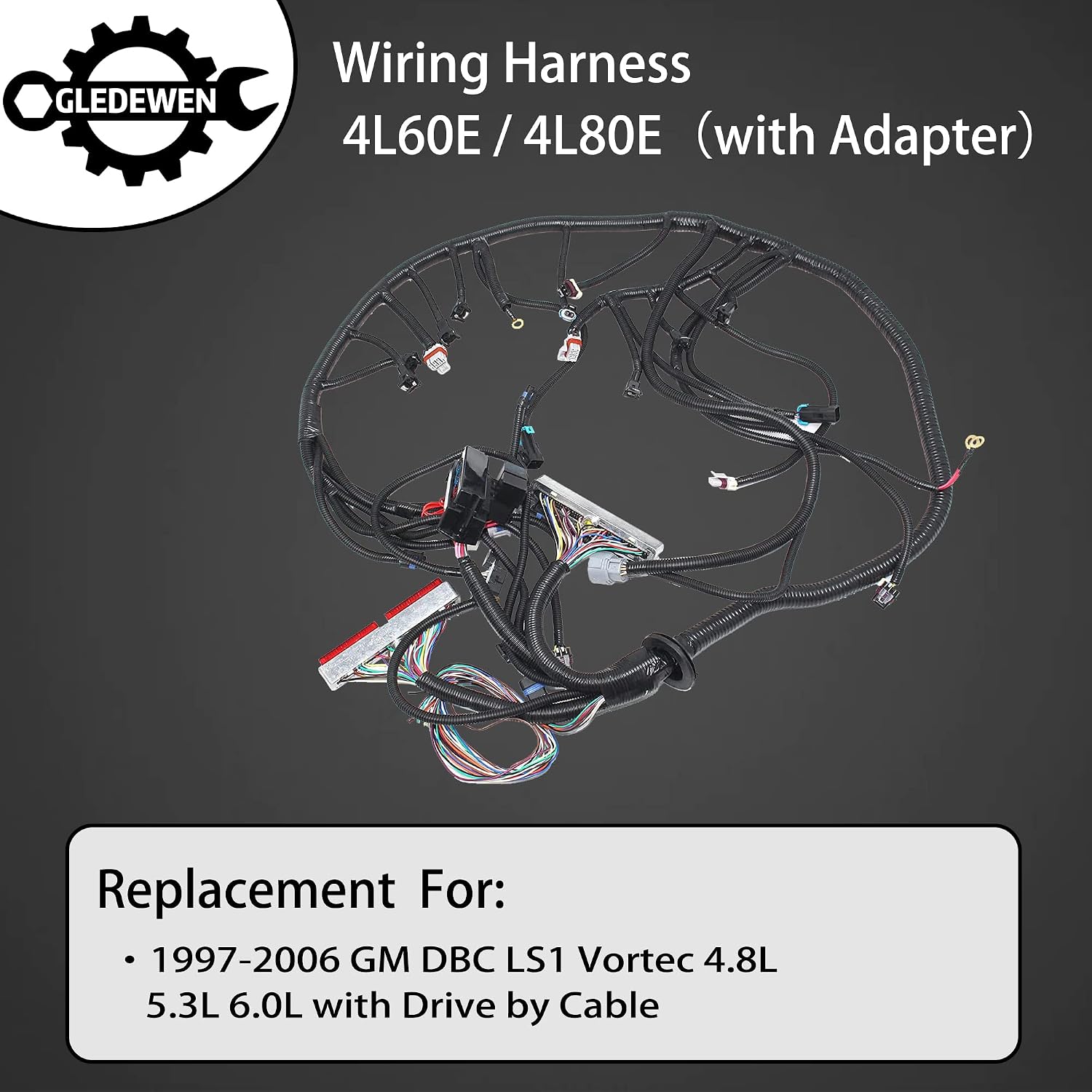
Check price on AmazonVerified buyers of one widely listed standalone LS swap harness in the $120–$160 range have flagged something the product listing does not clearly state: it arrives terminated with Multec (EV1) connectors. If you’re pairing it with flex-fuel LS3 or any late Gen IV injectors wearing EV6 bodies, you will not plug in without adapter pigtails. This isn’t a wiring defect — the harness can function correctly — but the omission in the product description is a genuine information gap that catches builders off guard on install day. Budget for the FainWan EV1-to-EV6 adapter kit before your install date.
Budget Standalone Harness — Safety-Critical Wiring Diagram Warning
Standalone
$87.89
In stock on Amazon
Check price on AmazonA second budget harness in this category generated a one-star review with a specific and serious claim: the included wiring diagrams were reported as incorrect, and the reviewer states the errors caused PCM damage. A Gen IV PCM — E38 or E67 units — typically costs $400–$800 for a usable programmed core. That’s a significant loss from a documentation error.
Before powering up any unfamiliar budget harness, apply this verification sequence:
- Cross-reference the included diagram against a known-good independent source. The Holley Terminator X Install Manual, Rev. D (available through holley.com) includes reference pinouts for common LS PCM connectors. The LS swap wiring coverage published in Hot Rod Magazine provides additional circuit-level reference. Use both.
- Use a digital multimeter to verify continuity from each PCM connector pin to its labeled circuit before connecting the PCM.
- Check for shorts between ground circuits and 12V circuits with the harness unplugged from both the PCM and all sensors.
- Do not connect the PCM until you’ve independently verified the main relay circuit and the PCM power and ground feeds with a meter.
Motor Trend, in their feature “Budget LS Swap Guide: What the Listings Don’t Tell You,” frames this precisely: treat any budget harness diagram as a draft to be verified, not a final authority. That framing is correct and should govern every budget swap harness you encounter.
Budget Standalone Harness — Missing Oil Pressure Connector
Standalone
$87.89
In stock on Amazon
Check price on AmazonA third harness in this price tier receives generally positive buyer feedback and is described as a functional working solution — but a recurring note in reviews flags a missing oil pressure sensor connector as an undocumented gap. On a street-driven swap, this matters more than it might appear.
The LS oil pressure sender doubles as a combined oil pressure and oil temperature sensor on many Gen III and Gen IV applications. More critically, many LS PCM calibrations use the oil pressure signal to enable or disable the oil pressure-triggered fuel pump relay circuit. If that circuit is floating, fuel pump enable logic can behave unexpectedly, and — more importantly — you lose the low-oil-pressure shutdown protection that the factory calibration provides.
The workaround is a standalone oil pressure sender adapter pigtail, available separately from harness suppliers. Budget for it and know it’s coming before you’re staring at an open connector at 11 PM on install day.
Budget Harness Gap Summary
| Harness Description | Documented Gap | Risk Level |
|---|---|---|
| Budget LS standalone — EV1-terminated | Arrives with Multec pigtails; EV6 adapters required for late Gen IV injectors | Low — fixable with a purpose-made adapter kit |
| Budget LS standalone — diagram errors reported | Wiring diagrams reported incorrect; PCM damage claim on record | High — verify every circuit independently before power-up |
| Budget LS standalone — missing oil pressure connector | Oil pressure sensor connector absent; undocumented in listing | Medium — affects fuel pump logic and safety shutdown |
Fuse Block: Included or Separate Budget Line?
One question that surfaces consistently in budget harness reviews: does the harness include a fuse block, or do you need to source one separately?
The short answer: most standalone LS swap harnesses under $150 do not include a properly sized fuse and relay distribution block. They may include a fused main relay circuit, but the full distribution block for accessory and sensor circuits is frequently left to the builder as a separate decision.
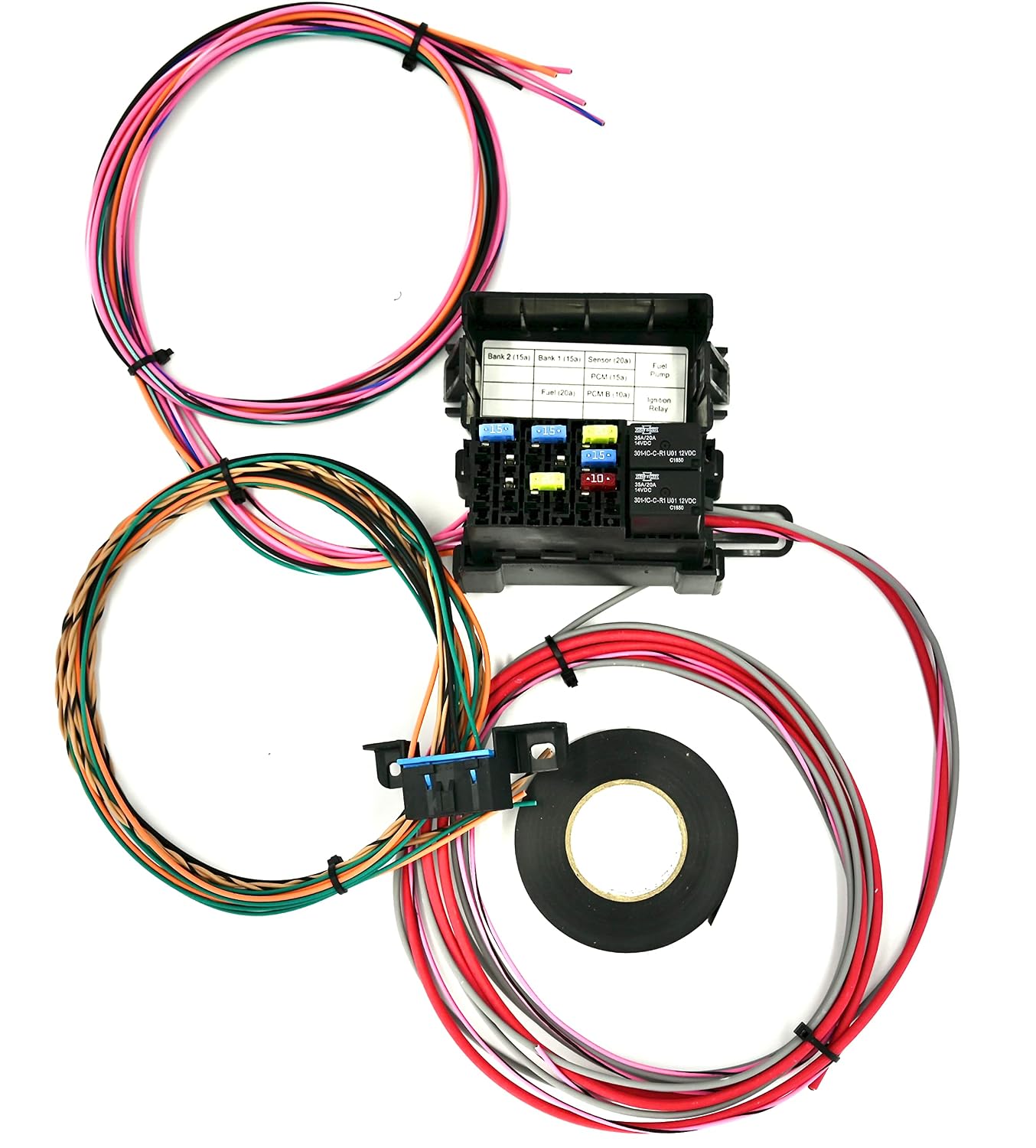
The Michigan Motorsports fuse block
Michigan
$94.99
In stock on Amazon
Check price on Amazonis frequently cited in buyer reviews for quality of construction and clear terminal labeling — both meaningful attributes when you’re tracing a gremlin at 1 AM. One important note drawn from buyer feedback: the mounting bracket is not included when purchased through third-party marketplace channels — it is included only when purchased directly through the BP Automotive direct channel. If you need the bracket for firewall or inner-fender mounting, account for it as an additional line item.
Hot Rod Magazine’s ongoing LS swap wiring coverage consistently recommends treating the fuse and relay block as a separate budget line from the ECU harness itself — plan on $40–$120 for a quality distribution solution above and beyond whatever the harness includes. Engine Labs has made the same observation in their swap wiring features: the harness and the power distribution architecture are two different decisions, and conflating them is a common source of mid-project frustration.
Frequently Asked Questions
How do I identify whether my LS donor engine has EV1 or EV6 injector connectors before buying a harness?
Pull the fuel rail and look at the injector bodies. EV1 connectors are wide, rectangular, and flat-tabbed — roughly 1 inch wide. EV6 connectors are narrower, oval-profiled, and use a recessed clip. Engine Labs’ “LS Injector Identification Guide” correlates connector type to production year and casting number if you can’t physically inspect the engine before purchasing a harness.
Will an EV1-to-EV6 adapter work with a Holley Terminator X harness and LS3 injectors?
Yes — this is a confirmed pairing. The Terminator X harness ships with EV1 (Multec) pigtails as its factory termination. The FainWan EV1-to-EV6 adapter kit has been confirmed by verified buyers to successfully bridge the Terminator X harness to LS3 EV6 injectors with no fueling or signal anomalies reported.
What standalone harness features are commonly missing from budget LS swap harnesses under $150?
Across aggregated buyer reviews, the most common undocumented omissions are: EV6-compatible injector pigtails (many arrive EV1-terminated), oil pressure sensor connectors, dedicated fuse and relay distribution blocks, and fan control relay wiring. Assume any harness in this price tier requires supplemental sourcing for at least one of these items.
Why did a budget LS harness damage a PCM, and how can I verify wiring diagrams before powering up?
At least one budget harness in active marketplace listings carries a documented buyer complaint alleging that incorrect included wiring diagrams led to PCM damage. Before energizing any budget harness, cross-reference every circuit against the Holley Terminator X Install Manual pinouts (available through holley.com) or the reference diagrams in Hot Rod Magazine’s LS swap wiring coverage. Use a digital multimeter to verify continuity and check for shorts to ground or voltage on all circuits before connecting the PCM. Never treat a budget harness diagram as a final authority.
Do I need a separate fuse block with a standalone LS harness, or is one included?
Most budget LS swap harnesses under $150 do not include a standalone fuse and relay distribution block. The Michigan Motorsports fuse block is well-reviewed for construction quality, but note that the mounting bracket ships only through the direct BP Automotive channel — not through third-party marketplace listings. Budget the fuse block as a separate line item from the harness itself.
The decision rule is simple: If your LS donor engine is a Gen IV flex-fuel variant or an LS3 or LS7 application, assume EV6 injectors and confirm your harness termination style before ordering. If the harness arrives EV1-terminated, the FainWan adapter kit is a confirmed fix for that specific mismatch. If you’re working with any budget harness under $150, treat the included wiring diagram as a draft to be verified — not a final authority — before you connect your PCM. One session with a digital multimeter before first power-up costs you an hour. A replacement Gen IV PCM core costs you several hundred dollars and a week of downtime.