If you’ve just bolted a throttle-body fuel injection kit onto a small-block and the ECU (engine control unit — the brain that manages fuel and spark) is asking you to confirm a VE table (the volumetric efficiency map that tells the computer how much air the engine moves at every RPM and throttle position), it’s normal to feel like you opened the manual upside down. EFI tuning has a learning curve that no single resource fully covers, and a lot of builders reach for a book at exactly this stage. The problem is there are several well-regarded volumes, each aimed at a slightly different reader — and buying the wrong one means staring at chapters that either talk over your head or spend forty pages on things you already understand. This article benchmarks four of the most commonly recommended EFI tuning books against the questions real builders bring to the bench, so you can pick the one that actually matches where you are right now.
| EDITOR'S PICKEngine Management: Advanced Tun… | Mid-tierTuning programmable engine mana… | Budget pickHow to Tune and Modify Automoti… | |
|---|---|---|---|
| Edition stated | — | — | All New Edition |
| Coverage focus | Advanced tuning | Select/install/tune | Upgrade & modify |
| Tuning context | — | Home workshop & road | — |
| Series | — | — | Motorbooks Workshop |
| Price | $27.95 | $25.00 | |
| See on Amazon → | See on Amazon → | See on Amazon → |
The Candidate Field: Four Books, Four Different Readers
Before comparing them side by side, it helps to understand what each book is trying to do and who it was written for.
HP1557 — How to Tune and Modify Engine Management Systems (David Vizard, HP Books, 2003) earns consistent praise for one specific structural choice: it covers components and sensors before it touches ECU manipulation. For a builder who knows how a carb works but has never thought about a MAP sensor (manifold absolute pressure sensor — measures engine load) or an O2 sensor (oxygen sensor — tells the ECU whether the mixture is rich or lean), that sequencing matters. The reading experience is comparable to a well-produced magazine tech article: engaging, not overwhelming, technically honest. That’s a meaningful editorial achievement for a topic this dense.
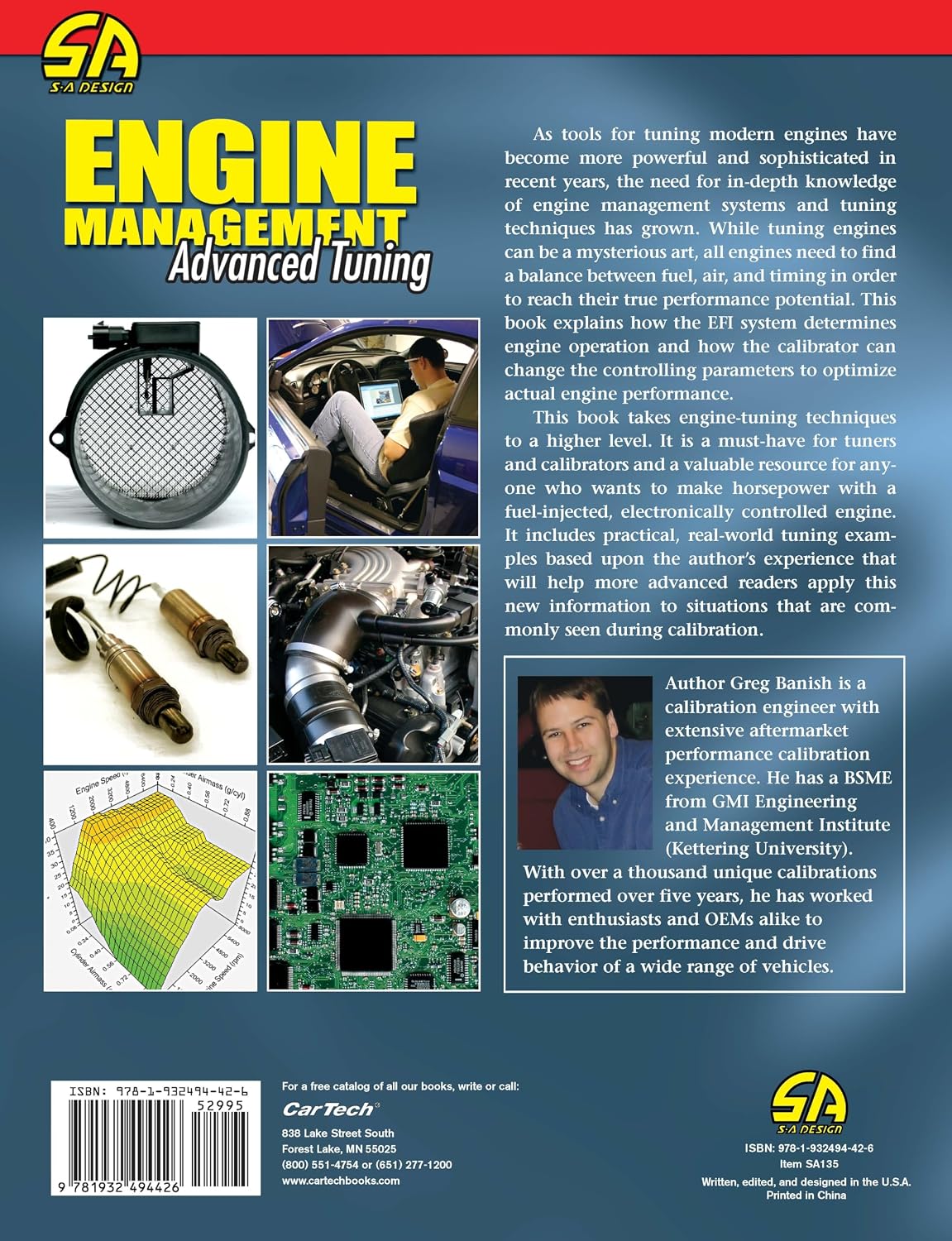
Engine Management: Advanced Tuning (Greg Banish, CarTech, 2007) is the book most frequently recommended by builders who are already mid-process — already staring at a running engine, already logging data, already frustrated that something isn’t right. The Banish book is not a gentle introduction. It assumes you understand why closed-loop fuel control exists and moves directly into how to make it work better. The title uses the word “advanced” accurately.
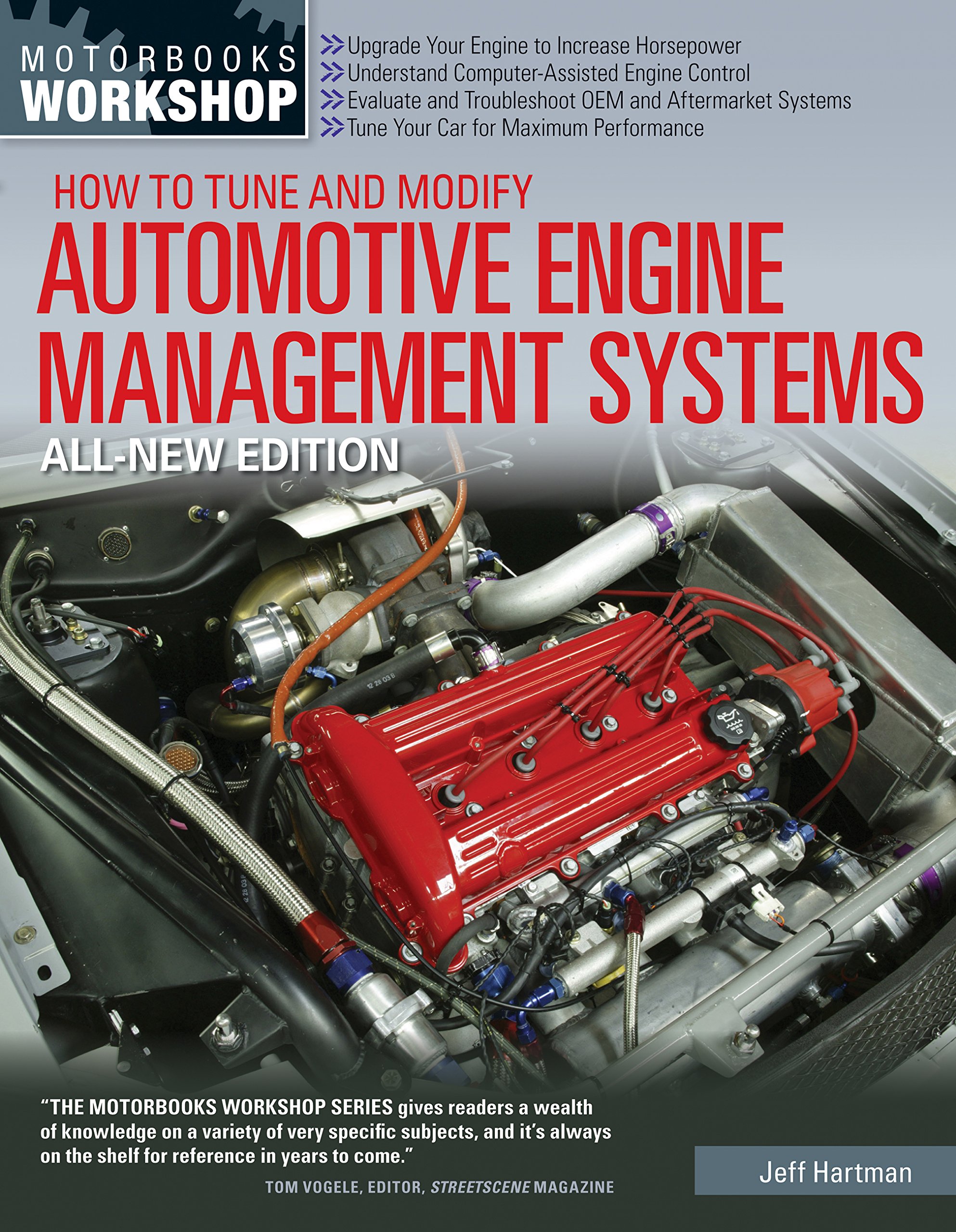
How to Tune and Modify Fuel Injection (Jeff Hartman, Motorbooks, 2004) earns a reputation that’s somewhat underappreciated in broader recommendations: it delivers genuine technical content rather than the photo-heavy filler common to large-format workshop books. That complaint about padding is a real frustration with the category, and Hartman’s volume avoids it. The result is a denser read that rewards builders willing to work through it.
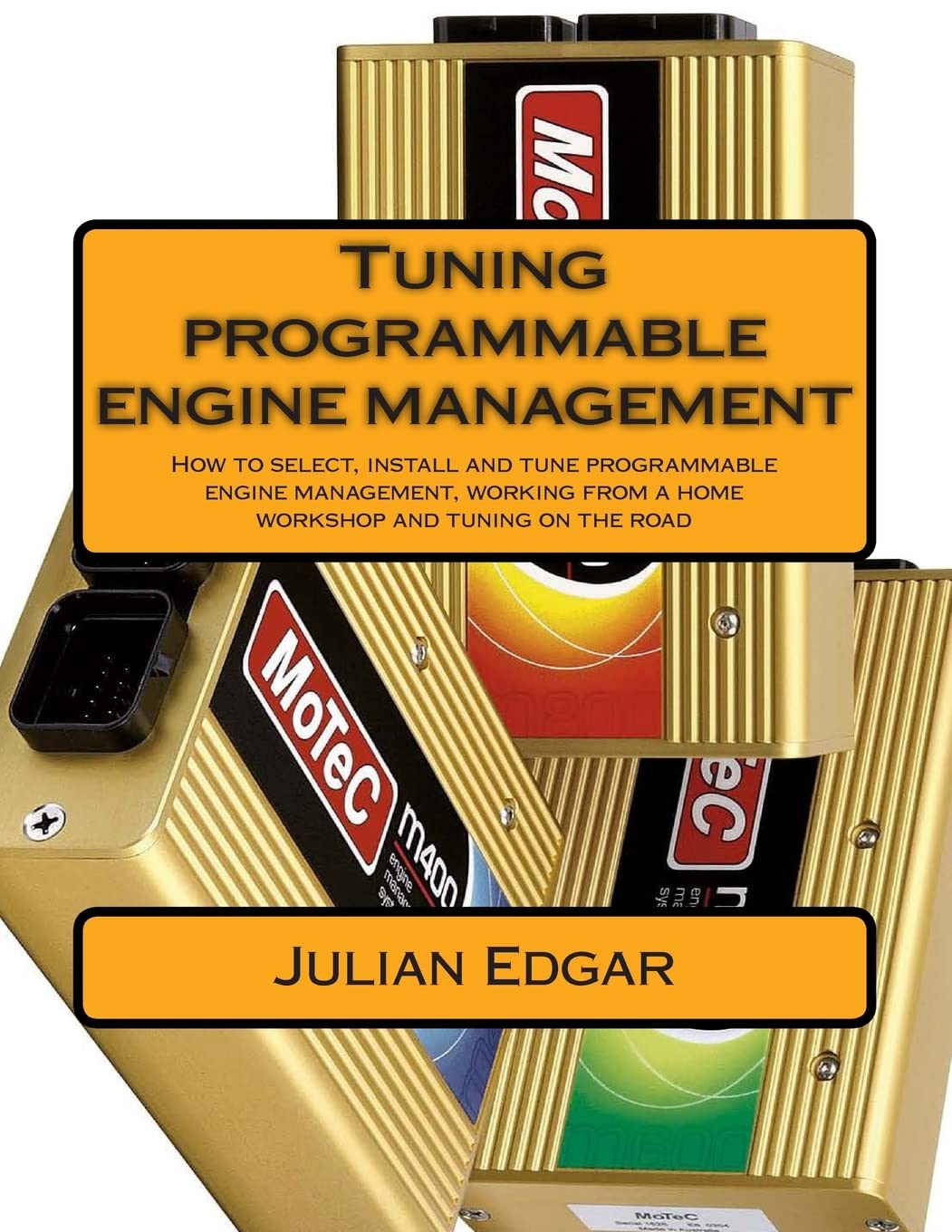
Programmable Electronic Engine Management (Ralph Brisbane, HP Books, 2009) occupies a narrower niche: builders who are specifically implementing a standalone programmable ECU from scratch, rather than tuning a self-learning kit like the Holley Sniper or Terminator X. If that’s your project, it earns its shelf space. If it isn’t, the other three are better uses of your budget.
How Each Book Handles the Questions That Actually Come Up
Rather than summarizing chapter lists, the most useful lens is how each book performs against questions that actually surface during a swap or first-start session.
### “I’ve never opened a VE table. Where do I start?”
HP1557 is the right answer here. Its structure — components first, sensors second, ECU interaction third — builds the mental model a first-timer needs before they start moving cells in a fuel map. Engine Labs has published foundational EFI explainers (enginelabs.com) that echo this same sequencing recommendation: understand what each sensor does before you start adjusting the table that depends on it.
The Banish book explicitly does not serve this use case. It is written for builders who already have working knowledge of EFI fundamentals and are trying to refine a tune, not build one from scratch. Jumping to Banish first is likely to produce frustration rather than answers. Hartman is useful but denser; a motivated beginner can work through it, but it asks more of the reader up front. Brisbane is narrowly focused on standalone ECU installation and doesn’t fill the introductory role at all.
Decision rule: If you’ve never tuned EFI before, HP1557 is your first read.
How
In stock on Amazon
Check price on Amazon### “My engine is running, but the tune isn’t right. What now?”
This is where the Banish book earns its reputation. It addresses closed-loop behavior, data interpretation, and the logic behind corrective tuning in a way that presupposes you know the basics and just need someone to explain the why behind what you’re seeing on a wideband gauge or a data log. Hot Rod magazine (hotrod.com) has covered the practice of iterative wideband-guided tuning extensively, and Banish’s framework maps directly onto that methodology — log, interpret, correct, verify.
For the bench-level diagnostic layer — sensor signal ranges, fuel pressure behavior, injector duty cycle limits — Hartman’s volume is a strong companion. Its density works in your favor at this stage because you’re no longer reading for concepts; you’re looking up specific values and behaviors.
Decision rule: If you have a running engine and a problem you can’t solve, Banish is the book to open. Hartman rides shotgun for hardware-level questions.
Tuning
$25.00
In stock on Amazon
Check price on Amazon### “I’m specifying a standalone ECU for a street/strip build.”
Hartman and Brisbane both address this territory, but from different angles. Hartman’s value is density and breadth: you get real technical content on injector sizing, fuel pressure requirements, and sensor compatibility without format padding — critical when you’re specifying components for a high-horsepower application. Engine Labs (enginelabs.com) regularly publishes injector sizing and fuel system guides that align with the methodology Hartman teaches, making the two resources complementary.
Brisbane goes deeper on programmable ECU architecture specifically — but only if that’s your exact application. For a shop specifying a Holley HP EFI or MSD Atomic AirForce system, Hartman is likely more broadly useful. Brisbane earns its place on the shelf only when the project is a fully custom standalone ECU implementation.
For builders working with Holley systems specifically, Holley’s own technical documentation (holley.com) covers ECU configuration at the product level in a way none of these books can match — the books provide the conceptual layer, and Holley’s documentation fills in the system-specific detail.
Decision rule: Hartman for component-level specification on any system; Brisbane only if you’re building a fully custom standalone ECU from scratch.
Engine
$27.95
In stock on Amazon
Check price on AmazonBy the Numbers
| Book | Best Fit Reader | Assumed Entry Level | Bench Reference Value |
|---|---|---|---|
| HP1557 (Vizard, HP Books, 2003) | Pre-tune / first swap | Carb-to-EFI newcomer | Medium — builds concepts |
| Engine Management: Advanced Tuning (Banish, CarTech, 2007) | Mid-tune troubleshooter | Working knowledge required | High — directly actionable |
| How to Tune and Modify Fuel Injection (Hartman, Motorbooks, 2004) | Spec-level builder / shop | Intermediate | High — dense, no filler |
| Programmable ECU Management (Brisbane, HP Books, 2009) | Standalone ECU installer | Intermediate–Advanced | Narrow — specific use case |
Frequently Asked Questions
Is the Banish Engine Management Advanced Tuning book appropriate for someone who has never opened a VE table, or do I need prerequisite knowledge?
You need prerequisite knowledge. This book is explicitly written for builders who are already engaged with the tuning process and understand basic EFI concepts. If you’ve never tuned EFI before, start with HP1557, build your mental model of how sensors and the ECU interact, and then move to Banish when you’re staring at a running engine that isn’t quite right.
Does HP1557 cover LS-specific EFI systems, or is it platform-agnostic?
HP1557 is largely platform-agnostic — it teaches EFI principles using concepts and sensor types rather than walking you through a specific OEM or aftermarket system. LS-swappers will recognize the sensor types and fuel control logic it describes, but they shouldn’t expect GM-specific wiring diagrams or LS1/LS3 ECU configuration guidance. Engine Labs (enginelabs.com) and Hot Rod magazine (hotrod.com) have published platform-specific LS EFI documentation that serves as a strong complement to HP1557’s foundational layer.
In what order should I read these books if I’m planning an EFI swap from scratch?
A logical sequence: Start with HP1557 to build the conceptual foundation — sensors, actuators, closed-loop logic. Move to Hartman when you’re specifying components, sizing injectors, or configuring a standalone system. Pull out Banish after first start, when you have a running engine and a tune that needs refinement. Brisbane is optional unless you’re building a fully custom standalone ECU system from scratch. Holley’s technical documentation (holley.com) should run parallel to all of this if you’re running a Holley-based system, since none of the books address product-specific menus and calibration screens.
Are any of these books current enough to cover CAN-bus and DBW throttle systems, or are they limited to older EFI architectures?
These titles were published between 2003 and 2009, which predates the widespread adoption of CAN-bus (Controller Area Network — the communication protocol that allows ECUs, sensors, and modules to share data on a single network) and drive-by-wire (DBW) throttle systems as standard topics in performance EFI. The core tuning logic remains valid; the architecture chapters show their age. Builders working with modern DBW throttle bodies or CAN-based sensor integration should supplement with current manufacturer documentation from Holley (holley.com), MSD, or AEM, as well as technical resources published by SAE International (sae.org) on the specific protocols.
Which book is most useful to have open on the bench during a first-start tuning session?
The Banish book, assuming you’ve done your prerequisite reading in HP1557. Its orientation toward active problem-solving — interpreting data, adjusting closed-loop behavior, diagnosing rich/lean conditions — matches the nature of a first-start session better than a conceptual introduction. Hartman is a strong bench companion for component-level questions: injector behavior, fuel pressure diagnostics, sensor signal interpretation. If you’re running one book at first start, Banish; if you can run two, add Hartman for the hardware side.
How do these books handle wideband O2 sensor integration and air/fuel ratio targeting?
Banish covers wideband-guided tuning most directly — it treats the wideband gauge as a primary diagnostic tool and structures the corrective tuning process around interpreting AFR (air/fuel ratio) data across the RPM and load range. HP1557 explains what the O2 sensor does and why the ECU responds to it, which is the conceptual prerequisite. Hartman addresses sensor signal characteristics at the specification level. None of the four books covers wideband controller product selection in depth; for that, manufacturer documentation from Innovate Motorsports, AEM Electronics, or Holley (holley.com) is the appropriate resource. Hot Rod magazine (hotrod.com) has also published practical wideband installation and interpretation guides that complement what these books teach.
The Decision Frame
Here’s how to think about this as a purchasing decision rather than a reading list:
If you’re pre-swap and building your mental model: HP1557 is the non-negotiable starting point. Its sensor-first structure is specifically what this phase requires, and its approachability is strong enough to treat it as a category standard for newcomers to EFI.
If you have a running engine and an unsolved tuning problem: The Banish book is the tool. Don’t start here, but once you’ve earned the prerequisite knowledge, it’s the most directly actionable volume in the field.
If you’re a shop or high-horsepower builder specifying components: Hartman’s density and genuine technical content make it the right reference. Its absence of photo filler is a real competitive advantage in a category where padding is a documented problem.
If you’re building a fully custom standalone ECU system: Brisbane earns its shelf space for that specific application. For everything else, the other three serve the role better.
None of these books is current enough to serve as your sole CAN-bus or DBW reference in 2026. Treat them as the foundation layer, with manufacturer documentation from Holley (holley.com), MSD, and AEM, and technical publications from SAE International (sae.org) filling the modern architecture gaps. The fundamentals they teach — fuel control logic, sensor interpretation, closed-loop behavior — don’t expire. The specific architecture chapters do.