If you’re new to EFI — electronic fuel injection, meaning a computer-controlled fuel system that replaces a carburetor — the learning curve can feel steep. The ECU (engine control unit, the brain of the system) manages fuel delivery, ignition timing, and a stack of sensors in real time. Getting that calibration right, especially on a modified engine, takes knowledge you can’t download from a tune file alone. Books have filled that gap for decades, and in 2026 there are still a handful of titles worth buying. The problem is there are also a handful that will waste your Saturday and your money. This guide cuts through the noise: we stack-ranked the major EFI tuning books by what working builders and verified reviewers consistently say survives contact with a real build.
Why the “Which Book?” Question Actually Matters
Here’s the decision you’re really making: do you want a reference you’ll pull off the shelf mid-tune, or a one-read orientation you’ll donate to a kid at your local tech school? Both have value, but they cost the same and look nearly identical at checkout.
The EFI tuning book category splits cleanly into three functional types:
- Diagnostic / trouble-shooting references — organized around fault codes and sensor behavior
- Systems-architecture books — explain how closed-loop fuel control, lambda targeting, and ignition management actually work
- Platform-specific how-to volumes — walk you through one system (MegaSquirt, HPTuners, a specific kit) step by step
Buying the wrong type for your stage is the most common mistake. A first-time converter who buys a diagnostic reference gets lost. An advanced tuner who buys a photo-heavy how-to feels condescended to. The stack rank below is organized around where each book actually earns its keep.
The Stack Rank — Annotated
Tier 1: The One That Earns a Permanent Spot on the Bench
Greg Banish — Engine Management: Advanced Tuning (ISBN 1932494421)
This is the book that reviewers reach for superlatives on. Across aggregated reader feedback, the pattern is consistent and emphatic: buyers who did a wide search before purchasing call this the best EFI tuning book they found, full stop. One frequently cited comparison names a competing book with “Engine Management Systems” in the title as noticeably inferior — which is useful because both titles surface in the same search results and look credible at a glance.
What makes Banish’s book work at a bench level is density. It does not pad page count with glamour shots of finished builds. It explains why a VE (volumetric efficiency) table works the way it does, why closed-loop trims behave differently at cruise versus tip-in, and why ignition advance interacts with fuel delivery in ways that matter to a modified engine. For a builder running a Holley HP EFI or any standalone ECU with user-accessible fuel and spark maps, this is the architecture manual you need underneath the platform-specific documentation.
The question that comes up in the FAQ below — whether Banish’s work applies to self-learning systems like the Holley Sniper 2 — is worth addressing directly here: yes, with important context. Self-learning systems handle closed-loop trims automatically, but they still operate on the same underlying logic this book describes. Understanding what the ECU is doing autonomously makes you dramatically better at setting the base tune it learns from. Reviewers on working builds confirm this.
Verdict: Buy this one first if you have any tuning intent at all.
Tier 2: Strong Supporting Material — One for Diagnostics, One for Depth
Jeff Hartman — How to Tune and Modify Engine Management Systems (ISBN 0760343454)
Hartman’s book occupies a specific and valuable niche: it’s heavy on text in a genre that is frequently criticized for being light on text and heavy on photos of other people’s cars. That’s not a minor compliment. Reviewers who have bounced off the large-format how-to books — the ones where a two-page spread is 80% a beauty shot of a Camaro on a dyno — come back to Hartman specifically because it treats the reader as someone who wants to understand the system, not just follow steps.
The content architecture covers sensors, actuators, closed-loop control, and tuning methodology without assuming you’re locked into one ECU platform. That universality is both its strength and its limitation: builders running a specific system like EFILive or HPTuners will need to layer platform documentation on top. But as a conceptual foundation, it’s strong.
OnAllCylinders.com’s Holley EFI resource library and Hotrod.com’s standalone EFI features both reflect the same pedagogical approach Hartman uses — lead with how the system works before explaining how to adjust it. If you find value in that editorial style, Hartman’s book will feel like a natural extension.
Verdict: Pair with Banish for a complete reference shelf. Read Hartman second.
HP Books — Fuel Injection (HP1557)
Reviewers describe HP1557 using an analogy that reveals exactly what this audience values: reading it feels like getting a great tech article, not a textbook. Actionable density, no photo filler, clear explanations of how port injection, throttle-body injection, and mass airflow sensing actually work.
Where HP1557 earns its spot is for builders earlier in their EFI journey — the first-time carb converter who needs a clean, un-intimidating orientation to how the whole system fits together before they commit to a kit. It does not go as deep as Banish on tuning strategy, and reviewers acknowledge that, but they’re not buying it for that reason. They’re buying it to build the mental model, and it delivers on that job.
Verdict: Best entry-point read. Ideal for the first-time converter who wants context before they spec a kit.
Tier 3: Narrow Applications — Buy Only if the Platform Fits
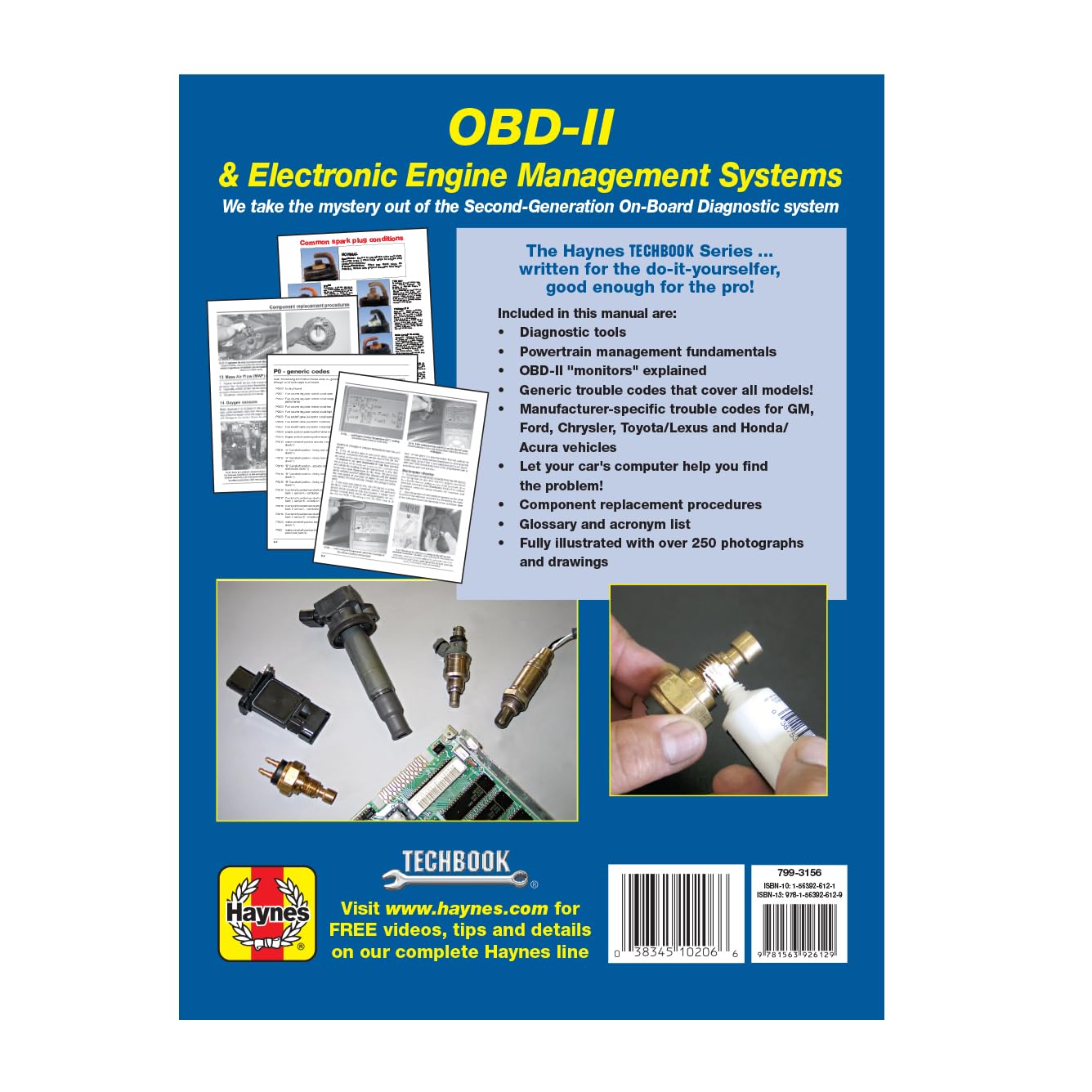
Haynes — OBD-II & Electronic Engine Management Systems Techbook (ISBN 0801636302)
This book generates the strongest contrast signal of any title in the category. Reviewers who purchased it alongside the leading alternative (most commonly Banish’s Advanced Tuning) describe the Haynes volume as so inferior by comparison that they wished they had not bought it. That’s not a mild preference — it’s the kind of buyer regret that shows up repeatedly in aggregated review patterns.
The critical distinction: the Haynes Techbook is organized around OBD-II (on-board diagnostics, the standardized fault-code system used on vehicles since the mid-1990s) diagnostic procedures, not EFI tuning methodology. If you need to understand why a P0171 code appears and how to trace it to a sensor fault, this book has value. If you want to understand how to build a fuel map, optimize a VE table, or interpret trim data — it does not cover that ground. Buyers who expected the latter and got the former are the source of the negative comparisons.
Verdict: Appropriate only for diagnostic-focused work. Do not buy expecting tuning depth.
Al Ansley (Brisbane) — Programmable Electronic Engine Management (ISBN 1503312976)
This title occupies the narrowest niche in the stack. Review volume is thinner and less specific than the books above, which itself signals something about where it lands in the category hierarchy. The content covers programmable EMS fundamentals at a level useful for MegaSquirt-adjacent projects and DIY standalone builds, but reviewers don’t reach for the same superlatives the Banish book generates.
For builders working specifically on custom DIY ECU implementations — where the system isn’t a commercial kit with its own documentation — this fills a gap. For everyone else, Banish and Hartman cover the same conceptual territory with more community validation behind them.
Verdict: Situational. Relevant if your build involves a DIY or open-source ECU platform.
By the Numbers
| Book | Best For | Tuning Depth | Platform-Specific? |
|---|---|---|---|
| Banish Advanced Tuning | All tuning builds | High | No — universal |
| Hartman Engine Management Systems | Intermediate reference | High | No — universal |
| HP1557 | First-time EFI builders | Medium | No — universal |
| Haynes OBD-II Techbook | Diagnostics only | Low | OBD-II fault codes |
| Brisbane Programmable EMS | DIY / open-source ECU | Medium | DIY/MegaSquirt lean |
Frequently Asked Questions
Which EFI tuning book should I read first if I have no prior ECU experience?
Start with HP1557. It’s the clearest orientation to how fuel injection systems work before you’re in the weeds of VE tables and closed-loop control. Once that foundation is in place, move to Banish’s Advanced Tuning — the conceptual progression is smooth and reviewers who read them in that order report the best results.
Does the Haynes OBD-II book cover EFI system tuning or only fault-code diagnostics?
Only fault-code diagnostics. The Haynes Techbook is organized around OBD-II scan tool use and diagnostic tree logic — it will help you understand why a sensor code fires and how to trace it, but it does not address fuel mapping, timing curves, or closed-loop tuning strategy. Multiple reviewers who bought it expecting tuning content wished they had not. Know what job you’re hiring it for before purchasing.
Is Greg Banish’s Engine Management: Advanced Tuning relevant to modern self-learning EFI systems like the Holley Sniper?
Yes, and more than you might expect. Self-learning systems like the Holley Sniper 2 automate the closed-loop correction process, but they’re still executing the same underlying logic — they’re making decisions about fuel trim, lambda targeting, and load compensation that Banish explains in detail. Understanding what the ECU is doing autonomously makes you significantly better at configuring the base calibration it learns from, interpreting the data log, and diagnosing situations where the self-learn hits its limits. Enginelabs.com’s EFI fundamentals coverage reflects the same principle: self-learning doesn’t make tuning knowledge obsolete.
Are any of these books specific to LS platform tuning with HPTuners or EFILive?
None of the books in this stack are LS-specific or HPTuners/EFILive-specific. They cover universal EFI principles. For LS platform work with HPTuners or EFILive, the best primary references are the official documentation from both software vendors and the platform-specific content published by enginelabs.com and hotrod.com — both maintain LS tuning editorial libraries. Banish and Hartman function as the theoretical layer underneath those platform-specific resources, not replacements for them.
Can I learn to tune a MegaSquirt system from a printed book alone, or do I need online resources as well?
A printed book can build the conceptual architecture, but MegaSquirt tuning in practice runs on community documentation. The DIYAutotune wiki, platform-specific forums (approach with appropriate skepticism and triangulation), and the Brisbane programmable EMS book collectively form the realistic reference stack for a MegaSquirt build. No single printed book covers the firmware-version-specific behavior, sensor wiring details, and tuning software UI that an active MegaSquirt build requires. Buy Banish for the conceptual layer; plan to supplement heavily with current platform documentation for the practical execution.
The Decision Rule
If you’re only buying one book: Banish’s Engine Management: Advanced Tuning. Reviewers across aggregated feedback consistently place it above every alternative in the category, and it earns that position by treating tuning as a discipline worth understanding rather than a series of steps to follow.
If you’re building a reference shelf: add Hartman for depth and HP1557 as the orientation layer for anyone new to the shop.
If your specific job is OBD-II fault diagnosis with a scan tool: the Haynes Techbook has a defined, narrow use case — just don’t confuse it for a tuning resource.
The books that survive a running build are the ones you can open mid-session to confirm what the ECU is doing and why. That’s the filter. Apply it before you buy.