If you’ve ever watched a carbureted classic stumble through a cold start on a February morning and thought, there has to be a better way — you’re already halfway to an EFI conversion. EFI stands for Electronic Fuel Injection, and it means swapping your mechanical carburetor for a computer-controlled system that reads sensors and delivers exactly the right amount of fuel at exactly the right time. The result is better cold starts, improved fuel economy, and an engine that self-adjusts as conditions change — without you touching a screwdriver. The challenge on a classic build is budget. Full sequential port injection can push past $3,000 installed. But there’s a real middle ground, and that’s what this article is about: three approaches that keep costs under control without sacrificing reliability.
We’re going to compare the MSD Atomic TBI (a self-contained throttle-body injection unit), Sniper-style kits (like the Holley Sniper 1 and its competitors), and sump-fed fuel systems (a supporting component strategy that solves tank and fuel-delivery problems). By the end, you’ll have a genuine if your situation looks like X, buy Y — not a vague “it depends.”
The Three Contenders: What You’re Actually Choosing Between
Before you can compare price, you need to understand what each system actually does differently.
MSD Atomic TBI
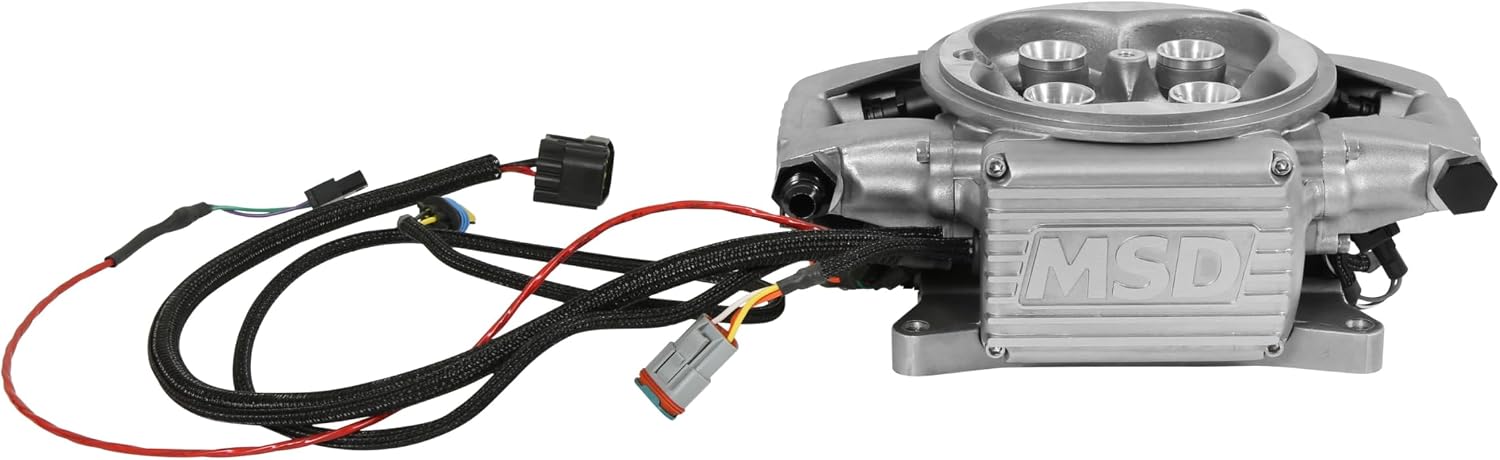
The MSD Atomic TBI mounts in the carburetor’s four-barrel spot and acts as a complete brain-and-fuel-delivery unit. Its key selling point is the no-return-line fuel system design. On a classic build with a stock tank and a mechanical pump that lives at the front of the engine, this matters enormously — you don’t have to run a return line back to the tank. That’s a significant chunk of installation complexity removed. The handheld programmer (a small wired remote) also earns consistent praise in published owner reviews; configuring fan temperatures and fuel priming takes minutes, with no laptop required. Per the MSD Performance Atomic TBI Installation and Tuning Manual (2023 edition), the system operates at a regulated low pressure appropriate for throttle-body injection and is designed around a single-line fuel configuration from the factory.
EVIL 30-70PSI
$75.99
In stock on Amazon
Check price on AmazonHolley Sniper 1 and Sniper-Style Kits
The Holley Sniper 1 and comparable four-barrel-replacement TBI units operate on the same carburetor-footprint concept but typically require a return fuel line back to the tank and a higher-pressure inline electric pump. Hot Rod Network’s carb-to-EFI conversion coverage at hotrod.com identifies the return-line requirement as the number-one sticking point for builders working on 1960s and early 1970s muscle cars with in-tank senders not designed for EFI pressures. The Sniper 1’s self-learning closed-loop tuning is well-regarded; Engine Labs’ budget EFI shootout coverage at enginelabs.com identifies the Holley self-learn algorithm as one of the more refined in the sub-$1,000 segment. But the fuel system requirements are real work, and they need to be planned before the kit arrives.
MSD
$1,699.95
In stock on Amazon
Check price on AmazonSump-Fed Systems
Sump-fed systems aren’t standalone EFI kits — they’re a fuel-delivery strategy. The Edelbrock fuel sump, for example, sits in the engine bay and acts as a small reservoir that your existing mechanical pump fills. An electric pump then draws from the sump and feeds the EFI throttle body at the correct pressure. Per Edelbrock’s Fuel Sump Kit Product Documentation and FAQ (2024), the sump is compatible with both mechanical and electric pump configurations, and the core advantage is that your mechanical pump stays in place. Pair a sump with a Sniper-style kit and you solve the return-line problem without re-plumbing the tank. Owner accounts and published build documentation consistently flag one installation detail that Edelbrock’s included directions reportedly don’t emphasize adequately: the sump must be installed level. A sump installed at even a slight angle introduces air pickup under cornering or hard acceleration.
MSD
$1,699.95
In stock on Amazon
Check price on AmazonWhere Each System Breaks Down: The Honest Tradeoffs
MSD Atomic TBI: Distributor Compatibility Is the Gotcha
The MSD Atomic TBI’s no-return-line design is genuinely valuable, but the system’s relationship with ignition hardware is its most documented failure point. MSD’s Atomic TBI Installation and Tuning Manual specifies compatible distributor types, and owners who deviate from that list run into trouble. Published owner accounts flag distributor compatibility as the most common reason for returns — including documented cases where an owner installed a new aftermarket HEI distributor and could not get the fuel pump to prime during startup. The system simply refused to proceed through its startup sequence.
This is not a fringe issue. The MSD Atomic TBI communicates with the distributor for timing reference, and the HEI signal pattern from some aftermarket units falls outside what the ECU expects. If you’re running a stock GM HEI, verify your specific distributor year and model against MSD’s compatibility list before ordering. The tech support experience, based on aggregated owner feedback, has also drawn criticism — when you’re stuck at 9 PM with a car that won’t prime, the quality of the support line matters.
Sniper-Style Kits: Return Line and Fuel Pressure Math
The Holley Sniper 1 and comparable kits require a return line and an electric inline pump capable of delivering the system’s required pressure consistently. OnAllCylinders’ fuel pressure coverage at onallcylinders.com explains that most self-learning TBI systems need regulated pressure in a specific range, and that an unregulated pump or a pump spec’d too aggressively will push pressure beyond what the injectors are calibrated for. Per the Holley Performance Sniper EFI System Installation Instructions (2024 edition), the system expects a stable, regulated fuel supply — the installer is responsible for ensuring the pump and regulator combination delivers that.
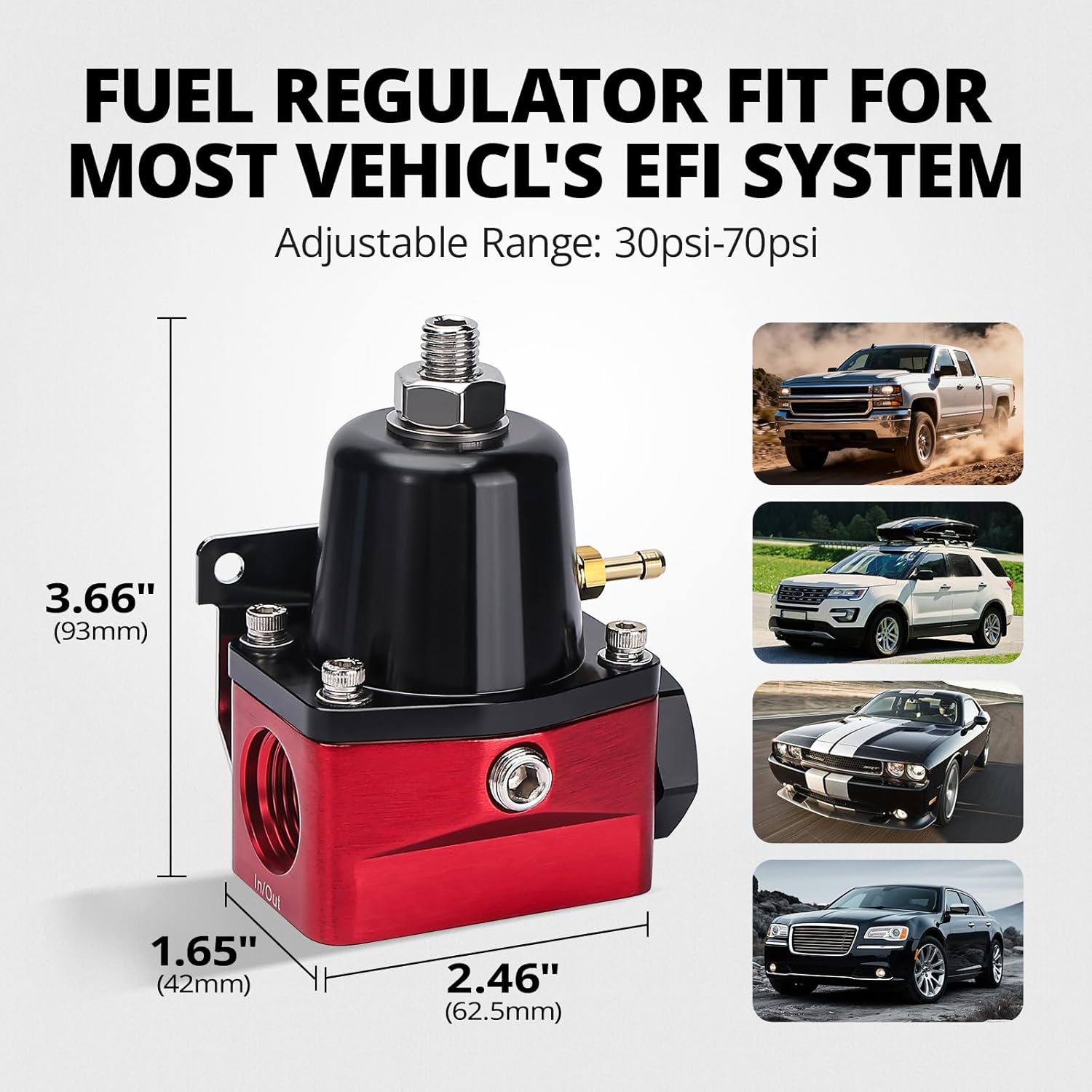
This is where a quality bypass-style regulator earns its place in the build. In documented Sniper build accounts, owners running aggressive inline pumps — pumps delivering well above spec — solved over-pressure conditions by installing a bypass regulator. A bypass regulator handles excess pressure more effectively than a simple return-style unit under varying flow demand. If you’re sourcing your own pump rather than using a kit-bundled unit, budget for a reputable regulator. An under-$30 inline regulator from an unknown brand is false economy on a $700–$900 EFI investment.
Sump-Fed Systems: Level Installation Is Non-Negotiable
The Edelbrock sump’s mechanical-pump-compatible design is its headline feature, and it works — with one condition that experienced builders emphasize consistently. Published build documentation and owner accounts confirm that a sump installed at even a slight angle will introduce air pickup under cornering or hard acceleration, leading to momentary fuel starvation at the worst possible moment. Edelbrock’s included installation directions reportedly do not stress this requirement adequately. Treat level installation as non-negotiable, not optional.
If you’re using the sump with an electric pump, confirm the pump’s PSI output matches your throttle body’s requirements. The sump does not regulate pressure — that’s the pump’s and regulator’s job.
By the Numbers: Quick Budget Reference (May 2026)
| System | Approx. Street Price | Return Line Required? | Laptop Required? |
|---|---|---|---|
| MSD Atomic TBI (complete kit) | $850–$1,050 | No | No (handheld) |
| Holley Sniper 1 (base kit) | $700–$900 | Yes | No (self-learn) |
| Edelbrock Fuel Sump (add-on) | $250–$350 | Reduces need | N/A |
| Bypass Regulator (quality unit) | $45–$75 | N/A (add-on) | N/A |
Prices based on published retailer listings as of May 2026. Confirm current pricing before purchase.
What the Self-Learn Won’t Fix For You
Every system in this comparison uses some form of closed-loop self-learning — the ECU reads oxygen sensor data and adjusts fuel delivery to hit its target air/fuel ratio. This is powerful, but it has limits that intermediate builders sometimes underestimate.
A self-learning ECU will compensate for moderate fuel trim corrections. It will mask symptoms of worn rings or a weak distributor up to a point — meaning the system might keep the engine running acceptably while hiding the fact that you need a ring job. Engine Labs’ budget EFI shootout coverage at enginelabs.com notes that self-learn algorithms optimize around whatever cylinder filling they see; they cannot distinguish between “this engine is healthy but needs trim” and “this engine is tired but running because the ECU is working hard.”
If your engine has worn rings or a distributor that’s marginal, the EFI conversion may not surface the problem immediately — but it won’t fix it either, and the problem will eventually express itself as an engine that won’t hold its self-learned tune. Do a compression check and distributor integrity check before installing any EFI system. This isn’t optional maintenance; it’s the baseline the system needs to do its job.
Frequently Asked Questions
Does the MSD Atomic TBI require a return fuel line, or can it run single-line from a stock tank? The MSD Atomic TBI is specifically designed to operate without a return fuel line — this is one of its primary engineering differentiators for classic builds. Per MSD’s Atomic TBI Installation and Tuning Manual, it uses a regulated, low-pressure single-line design that works with a stock tank and a compatible mechanical or electric pump. Verify pump pressure specs match the system’s requirements before final assembly.
What distributor types are compatible with the MSD Atomic TBI — will a stock HEI work? Compatibility varies by specific HEI year and brand. MSD publishes a compatibility list in their Atomic TBI installation manual, and owner accounts confirm that some aftermarket HEI units prevent the fuel pump from priming during startup. Before purchasing, cross-reference your exact distributor against MSD’s current compatibility documentation. This is the most commonly cited reason for product returns.
Can I use the Edelbrock fuel sump with an electric fuel pump, or does it require a mechanical pump? Per Edelbrock’s Fuel Sump Kit Product Documentation and FAQ (2024), the sump supports both mechanical and electric pump configurations. Its appeal in classic builds is that it allows you to keep your existing mechanical pump feeding the sump while a small electric pump delivers pressure to the TBI unit. An electric-only configuration works as well, provided the pump’s PSI output and flow rate match your EFI throttle body’s requirements. Install the sump level — this is the most consistently reported installation error.
How much fuel pressure does the MSD Atomic TBI need, and does the included pump deliver the right PSI? Per MSD’s Atomic TBI documentation, the system operates at regulated low pressure appropriate for throttle-body injection — significantly lower than port injection systems. The kit-included pump is spec’d for the system. If you substitute a higher-output pump, verify you’re not over-pressuring the system. A quality bypass regulator is a cost-effective safeguard if you’re using an aggressive pump from a previous build.
What happens if my engine has worn rings or a weak distributor — will the self-learn mask the problem? Self-learning systems compensate for fuel trim deviations, not mechanical deficiencies. Worn rings reduce cylinder fill and affect the oxygen sensor signal the ECU is optimizing around — the system may run adequately for a while, but the self-learned tune will drift and become inconsistent over time. A weak or incompatible distributor is more immediately disqualifying: on the MSD Atomic specifically, distributor issues can prevent the system from completing its startup sequence. Address mechanical and ignition baseline issues before installing any EFI system.
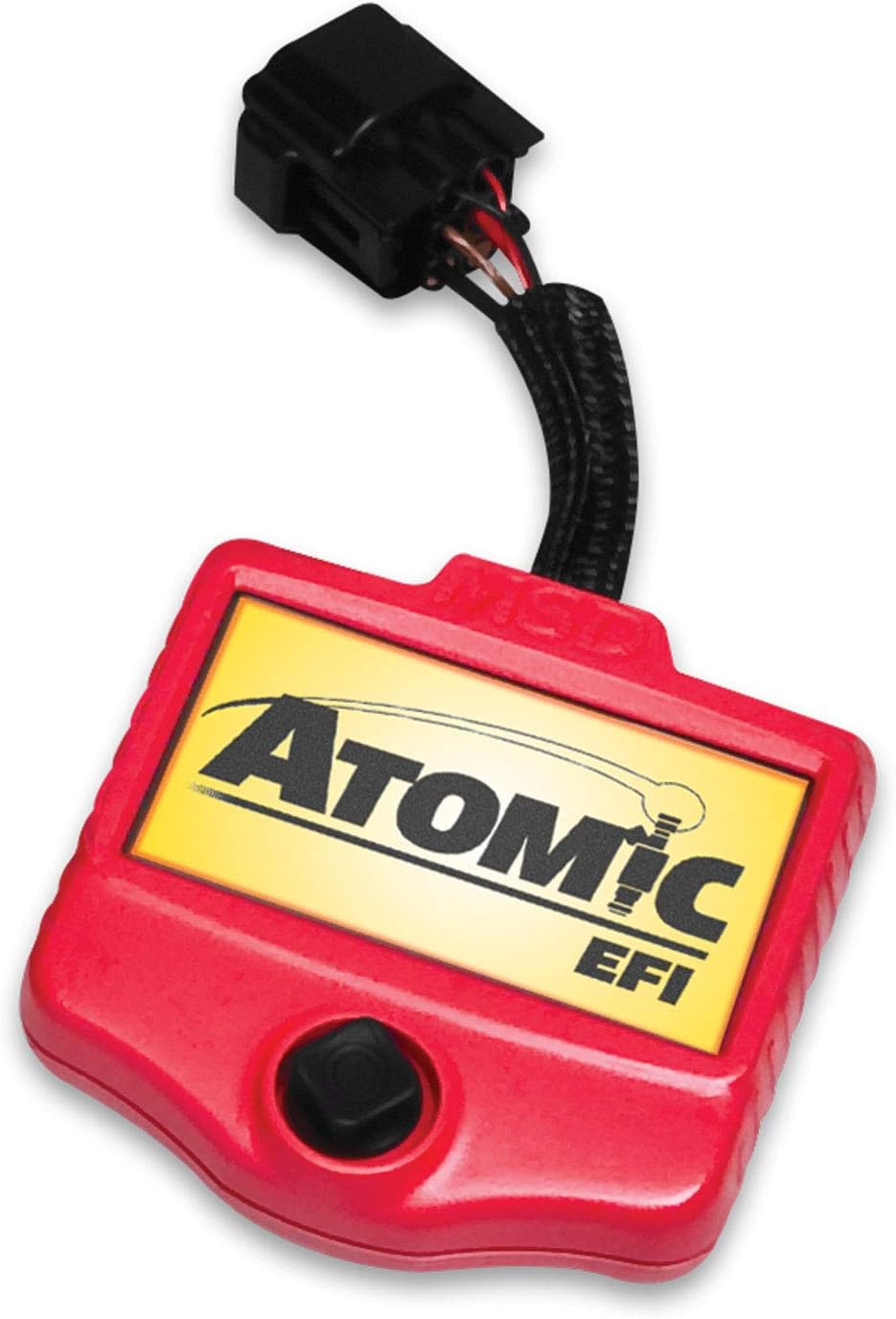
Is the handheld programmer on the MSD Atomic capable of adjusting fuel trims after installation? The handheld programmer is not set-and-forget. MSD’s documentation confirms that it allows post-installation adjustments including fan temperatures, priming parameters, and basic fuel trim inputs. It does not replace a full tuning laptop for advanced calibration, but for the classic-build use case — where you want a reliable daily driver without laptop dependency — it covers the operational adjustments most owners need. Multiple owner accounts describe making meaningful adjustments in under 15 minutes.
The Decision Framework: If X, Then Y
Here’s the honest synthesis for where your build sits:
-
If you’re running a stock tank, don’t want to re-plumb a return line, and have a compatible distributor → MSD Atomic TBI is the cleanest path. Verify distributor compatibility before ordering. The handheld programmer eliminates laptop dependency.
-
If you want the Holley self-learn algorithm and can run a return line → Holley Sniper 1 is well-supported, widely documented, and has a strong owner community. Budget for a quality bypass regulator if you’re sourcing your own pump.
-
If your fuel system is the obstacle and you want to keep your mechanical pump → Add the Edelbrock sump to your Sniper-style kit. Install it level. Treat that as mandatory, not optional.
-
If you’re seeing over-pressure with an existing pump on any of these systems → A bypass-style regulator is a known, low-cost fix. Don’t ignore over-pressure; injector damage and fuel mapping errors follow.
-
In all cases → Do your compression and distributor check first. A self-learning ECU is not a mechanical problem solver. It’s a precision instrument that rewards a healthy engine and punishes a neglected one.
The budget EFI market in 2026 has enough good options that there’s no reason to over-specify or under-buy. Match the system to your fuel system realities, verify your ignition hardware, and plan your regulator situation before the kit arrives. That order of operations is what separates a clean first-start from a frustrating return trip.